AI Customer Segmentation for Small Businesses: Target the Right Customers Every Time
Stop sending generic messages. AI customer segmentation helps small businesses target the right customers automatically—no data science degree required.
You're leaving money on the table every time you send the same email to your entire customer list. Your best customers—the ones ready to buy again—get buried in generic promotions meant for first-time browsers. Your new subscribers receive offers for products they've never heard of. It's not a messaging problem. It's a segmentation problem.
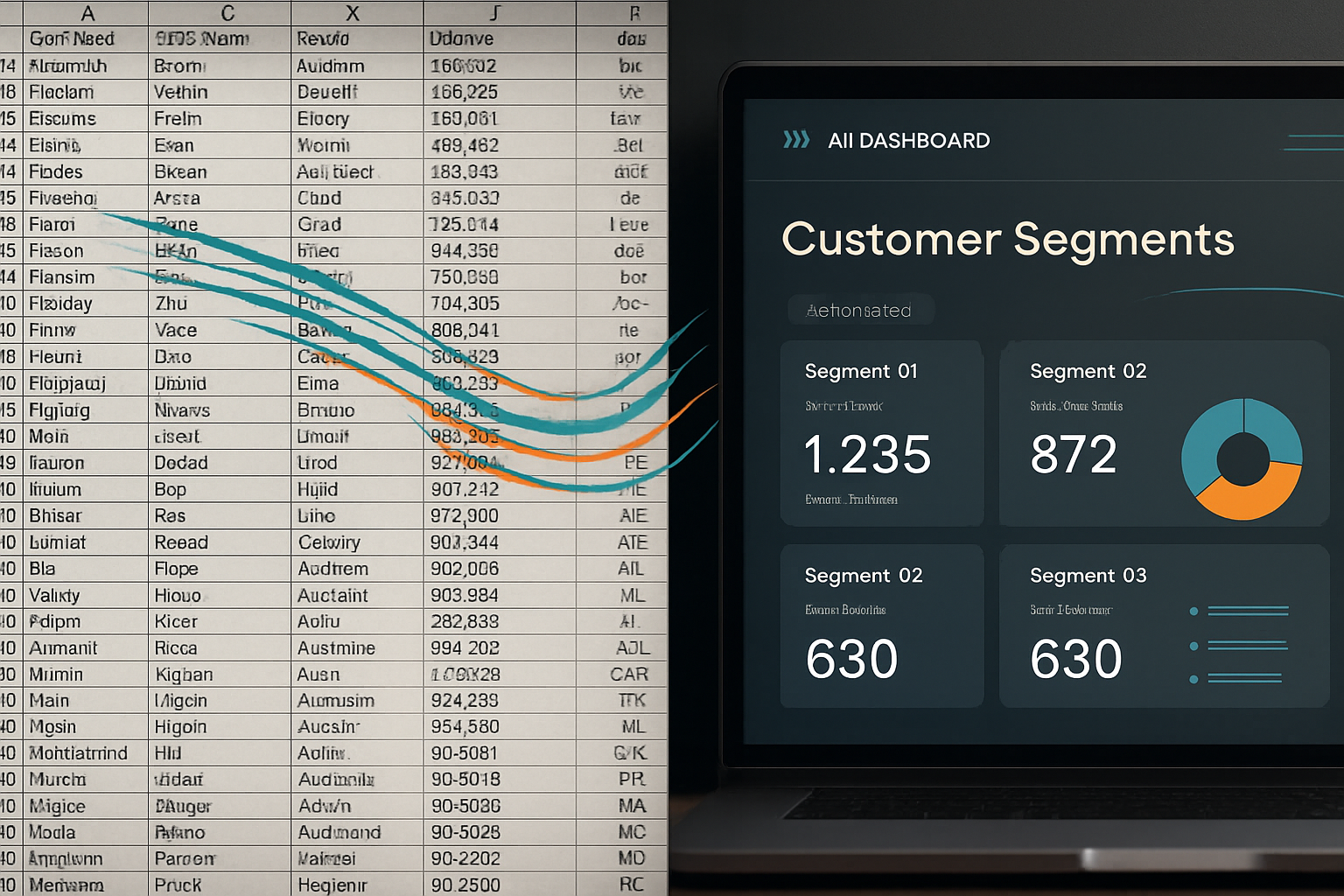
Traditional customer segmentation required spreadsheets, manual tagging, and hours of data analysis. By the time you finished sorting customers into groups, the data was already outdated. AI customer segmentation for small businesses changes that completely. Instead of spending hours creating customer segments manually, AI analyzes purchase history, browsing behavior, email engagement, and dozens of other signals in real-time—automatically grouping customers based on what they're actually doing, not what you think they might do.
For small businesses in Billings and beyond, this isn't just about working smarter. It's about competing with companies ten times your size without hiring a data science team.
What AI Customer Segmentation Actually Does
AI customer segmentation uses machine learning algorithms to analyze customer data and automatically create targeted groups based on behavior patterns, preferences, and likelihood to convert. Unlike static segments you build once and forget, AI segments update continuously as customer behavior changes.
Here's what makes it different from traditional segmentation:
- Real-time updates: Segments adjust automatically when customers take actions like making purchases, abandoning carts, or engaging with emails
- Predictive grouping: AI identifies patterns you'd never spot manually, like customers who browse on mobile but only buy on desktop
- Multi-dimensional analysis: Instead of segmenting by one or two factors, AI considers dozens of behavioral signals simultaneously
- Automatic optimization: The system learns which segments convert best and refines its criteria over time
This ties directly into broader AI marketing automation for small business strategies, where segmentation becomes the foundation for every personalized campaign you run.
Why Small Businesses Need AI Segmentation More Than Enterprises
Large companies have entire teams dedicated to customer data analysis. You don't. That's exactly why AI segmentation delivers more value to small businesses than it does to Fortune 500 companies.
When you're running marketing with a team of two—or just yourself—every hour counts. Manual segmentation means pulling reports, exporting spreadsheets, cross-referencing purchase data with email engagement, and then uploading segments back into your email platform. By the time you finish, you've spent half a day on work that AI handles in seconds.
More importantly, small businesses often have more diverse customer bases than they realize. A Billings-based outdoor retailer might have local hikers who buy frequently in small amounts, out-of-state customers who make large seasonal purchases, and gift buyers who only shop during holidays. Each group needs different messaging, different offers, and different timing.
AI spots these patterns without you having to hypothesis-test your way through dozens of segment combinations. It finds the high-value micro-segments hiding in your data—like customers who always buy within 48 hours of receiving an email, or those who only respond to discount codes above 20%.
Five Ways AI Segments Your Customers Better Than You Can Manually
1. Behavioral Prediction Segments
AI doesn't just group customers by what they've done. It predicts what they're about to do. This means creating segments like "likely to churn in the next 30 days" or "ready to upgrade to premium" based on engagement patterns, purchase frequency changes, and browsing behavior.
You can then trigger automatic campaigns to these segments—a win-back offer to the churn-risk group, or a product demo to the upgrade-ready segment—without manually monitoring every customer account.
2. Dynamic Purchase Intent Scoring
Traditional segmentation might flag someone as "interested in Product X" because they viewed it once. AI tracks the entire journey: how many times they viewed it, whether they read reviews, if they added it to their cart, and whether they're comparing it to competitors.
This creates segments based on actual purchase intent rather than passive interest. When you're implementing how to automate lead scoring with AI, this behavioral scoring becomes the backbone of your entire sales funnel.
3. Cross-Channel Behavior Patterns
Your customers don't interact with you on just one channel. They might discover you on Instagram, research on your website, and buy after receiving an email. AI connects these touchpoints to build complete customer profiles.
This matters when you're running campaigns across AI social media scheduling tools and email platforms simultaneously. AI identifies which customers respond better to social ads versus email, and adjusts their segment accordingly.
4. Micro-Moment Segmentation
Some buying signals last minutes, not days. AI creates temporary segments based on immediate behavior—someone who just abandoned a cart, visited your pricing page three times in one hour, or clicked through from a competitor comparison article.
These micro-segments trigger time-sensitive campaigns that catch customers in high-intent moments. This is especially powerful when integrated with affordable AI chatbots for small business websites, where the chatbot can deliver personalized offers to high-intent visitors in real-time.
5. Product Affinity Clustering
AI identifies which products tend to be purchased together, then segments customers based on affinity patterns you'd never notice manually. It might discover that customers who buy Product A within their first purchase almost always buy Product C within 90 days—even though the products seem unrelated.
You can then create automated nurture sequences that introduce Product C to new Product A buyers at exactly the right time, increasing lifetime value without additional manual work.
Setting Up AI Segmentation Without a Technical Background
You don't need a data science degree to implement AI customer segmentation. Modern platforms have made it accessible to non-technical business owners through user-friendly interfaces and pre-built templates.
Start with these steps:
- Choose an AI-enabled platform: Look for marketing automation tools that include built-in AI segmentation. Many of the best AI email marketing tools for SMBs now include this functionality without requiring separate software.
- Connect your data sources: Link your email platform, website analytics, e-commerce system, and CRM so the AI has complete customer data to analyze.
- Define your business goals: Tell the AI what matters to you—repeat purchases, higher order values, reduced churn, or faster conversions. The system will optimize segments toward these outcomes.
- Start with pre-built segments: Most platforms offer templates like "high-value customers," "at-risk customers," or "ready to buy." Use these initially, then customize as you learn what works.
- Test and refine: Run A/B tests comparing AI-created segments against your manual segments to see the performance difference.
The key is starting simple. You don't need to implement every possible segment on day one. Pick one high-impact use case—like reducing cart abandonment or increasing repeat purchases—and let AI handle the segmentation for that specific goal.
What AI Segmentation Costs (And What It Saves You)
Pricing varies widely, but most small businesses can access AI segmentation for $50-$300 per month as part of their existing marketing automation platform. Standalone AI segmentation tools might run higher, but they're rarely necessary when your email or CRM platform already includes the functionality.
The bigger question is ROI. Calculate how many hours you currently spend on manual segmentation and list management each month. If you're spending even five hours monthly at a $50/hour value of your time, that's $250 in labor costs. AI eliminates most of that work while improving targeting accuracy.
More importantly, better segmentation directly increases revenue. Even a conservative 10% improvement in email conversion rates can generate thousands in additional monthly revenue for small e-commerce businesses. One Billings-based retailer we worked with saw a 34% increase in email revenue within 60 days of implementing AI segmentation—not from sending more emails, but from sending the right emails to the right people.
Common Mistakes Small Businesses Make With AI Segmentation
The technology is powerful, but it's not automatic success. Avoid these pitfalls:
- Insufficient data: AI needs enough customer data to identify patterns. If you have fewer than 500 customers or contacts, manual segmentation might still be more effective.
- Ignoring data quality: AI amplifies whatever data you feed it. If your customer data is messy, outdated, or incomplete, your segments will be too.
- Over-segmentation: Just because AI can create 50 different segments doesn't mean you should. Too many segments mean too many campaigns to manage and diluted messaging.
- Set-it-and-forget-it mentality: AI handles the technical segmentation, but you still need to create relevant messaging for each segment and monitor performance.
- Not integrating with your full marketing stack: Segmentation delivers maximum value when connected across all your marketing channels, not isolated in just your email platform.
Moving From Spray-and-Pray to Precision Marketing
Generic marketing messages feel like spam because they are spam. AI customer segmentation for small businesses lets you move from broadcasting the same message to everyone toward precision targeting based on actual customer behavior and needs.
The businesses winning in 2026 aren't necessarily the ones with the biggest marketing budgets. They're the ones using AI to work smarter, targeting the right customers with the right message at the right time—automatically, continuously, and without burning hours on manual data analysis.
If you're ready to stop guessing which customers want what and start knowing, AI segmentation is where that journey begins. At Agency 220, we help Montana small businesses implement AI-powered marketing automation that actually moves the needle. Let's build a segmentation strategy that turns your customer data into your competitive advantage.