Best Shipping Carriers for Small eCommerce Businesses: A Montana Retailer's Guide
Compare USPS, UPS, and FedEx to find the most cost-effective shipping carriers for your small eCommerce business, with special considerations for Montana retailers.
Your customer just clicked "buy now" on your handmade leather goods. They're excited. You're excited. Then you open your shipping dashboard and stare at a dozen carrier options, each promising the moon but charging different rates for the same package going to Bozeman versus Boston.
Choose the wrong carrier, and you'll either eat the cost difference or watch your conversion rate drop when customers see that $18 shipping fee at checkout. For small eCommerce businesses in Montana and beyond, your shipping carrier isn't just a logistics partner—it's a direct line to your profit margin and customer satisfaction scores.
Let's cut through the marketing fluff and look at which carriers actually deliver value for small online retailers.
Why Your Carrier Choice Matters More Than You Think
Most small business owners treat carrier selection like picking a coffee brand—grab whatever's familiar and move on. But your shipping carrier affects three critical business metrics:
- Operating costs: Carrier rates can swing 20-40% for identical packages
- Customer experience: Delivery speed and reliability directly impact repeat purchase rates
- Time investment: Some carriers require daily post office visits while others pick up from your door
When you're running a lean operation from Billings or anywhere else, these differences compound fast. The right carrier choice is part of a broader eCommerce shipping strategy that keeps you competitive without bleeding money on logistics.
USPS: The Small Business Workhorse
The United States Postal Service remains the go-to choice for most small eCommerce operations, and for good reason.
What USPS Does Well
First-Class Package Service handles lightweight items (under 16 oz) cheaper than any competitor. If you're shipping jewelry, cosmetics, or small accessories, you'll typically pay $4-8 for cross-country delivery with 2-5 day transit times.
Priority Mail flat-rate boxes eliminate the guessing game. Pack 70 pounds of product into a medium flat-rate box, and you pay the same $17.05 whether it's going to Miles City or Miami. This predictability makes it easier to choose between flat-rate and real-time shipping calculations for your checkout flow.
USPS also delivers everywhere—literally. UPS and FedEx hand off remote deliveries to USPS anyway, so you might as well cut out the middleman for rural Montana customers.
Where USPS Falls Short
Tracking reliability is inconsistent. Packages sometimes show "in transit" for days without updates, leading to customer service headaches.
Priority Mail, while convenient, isn't actually cheaper than UPS or FedEx Ground for heavier packages over 10 pounds. And USPS customer service can feel like calling into the void—getting answers about delayed packages requires patience most small business owners don't have.
Best For
Lightweight items under 5 pounds, businesses shipping to residential addresses across diverse locations, and retailers who need predictable flat-rate pricing for offering free shipping without destroying margins.
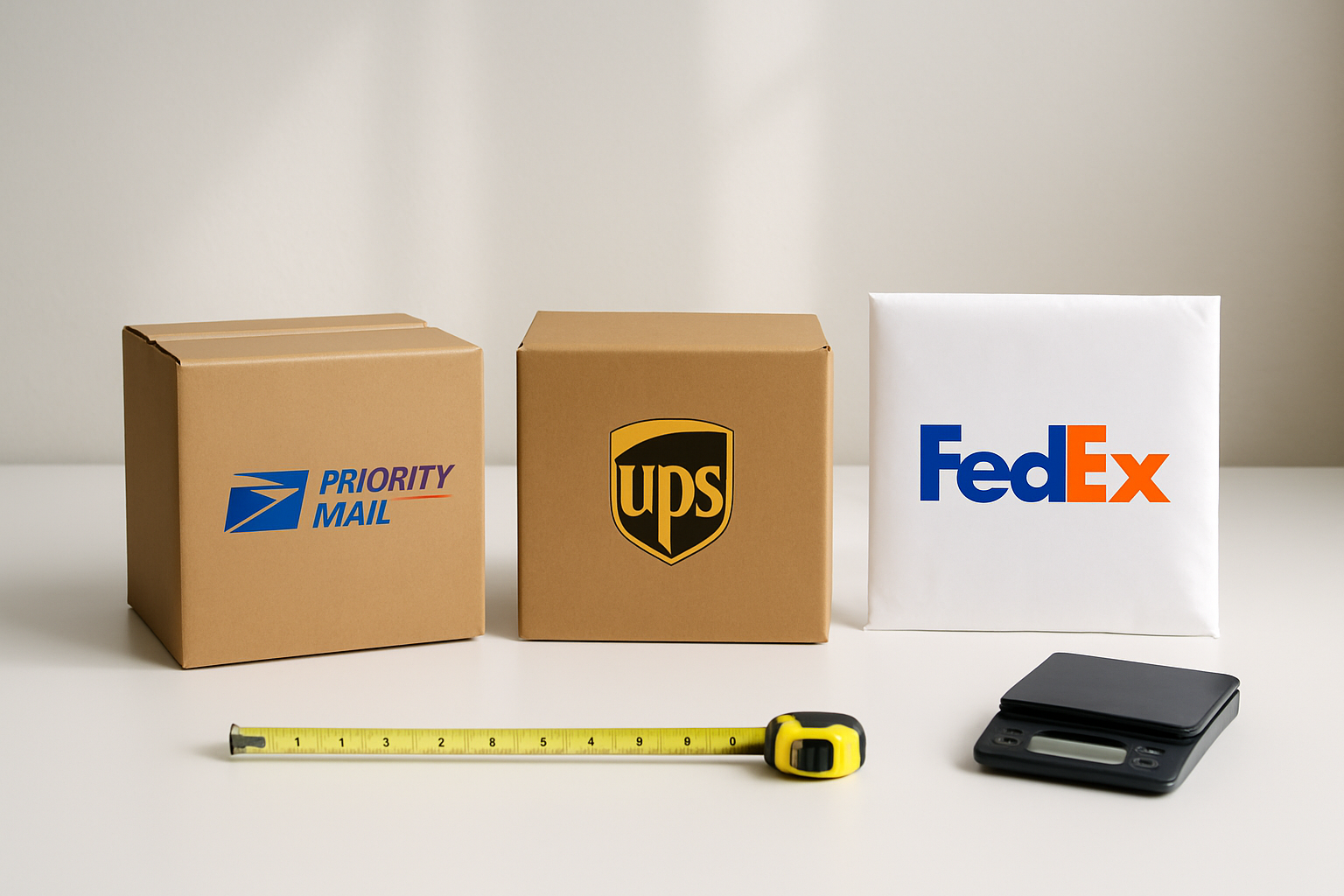
UPS: When Speed and Tracking Matter
UPS Ground becomes cost-effective once you're shipping packages over 10 pounds, especially if you're sending them shorter distances (under 500 miles).
UPS Advantages
The tracking system actually works. Customers can see exactly where their package is, reducing "where's my order" emails by half in our experience working with Montana eCommerce clients.
UPS offers free pickup with regular service, saving you daily post office runs. For a busy retailer in Billings shipping 20+ packages daily, this time savings alone justifies the slightly higher costs.
Business accounts unlock volume discounts. Once you're shipping 50+ packages monthly, UPS typically beats USPS on per-package costs for heavier items.
UPS Drawbacks
Residential surcharges add $4-5 per package. Since most eCommerce ships to homes, this hidden fee stings.
Smaller packages (under 5 pounds) cost significantly more than USPS. And dimensional weight pricing means that bulky, lightweight items get charged as if they were heavier—rough if you sell pillows or packaging materials.
Best For
Mid-weight packages (10-50 pounds), businesses with consistent daily volume, and retailers who value reliable tracking and professional pickup service over rock-bottom pricing.
FedEx: The Speed Option
FedEx Ground competes directly with UPS on pricing and service quality. For most small businesses, choosing between them comes down to which gives you a better negotiated rate.
FedEx Strengths
FedEx Home Delivery includes evening and weekend delivery at no extra charge—a genuine customer experience upgrade that costs extra with UPS.
Their SmartPost service (now called FedEx Ground Economy) combines FedEx's network with USPS final delivery for residential addresses. It's slower (5-7 days) but costs 20-30% less than standard Ground for lightweight packages.
Rate shopping between FedEx and UPS is smart business. Playing them against each other during contract negotiations can save 15-20% on shipping costs annually.
FedEx Limitations
The same dimensional weight penalties apply. And FedEx account setup feels more enterprise-focused—their systems assume you're shipping pallets, not individual packages to customers.
Best For
Businesses already getting competitive UPS quotes (use FedEx for leverage), retailers who want weekend delivery included, and operations shipping enough volume to negotiate business rates.
Regional Carriers: The Dark Horse Option
Carriers like OnTrac (West Coast), LaserShip (East Coast), and GSO don't serve Montana well, but they're worth mentioning for businesses with concentrated customer bases in specific regions.
These carriers undercut the big three by 10-30% in their coverage areas. If 80% of your customers live in California, Washington, and Oregon, OnTrac might cut your shipping costs dramatically.
The tradeoff? Limited coverage areas, less robust tracking, and your customers won't recognize the carrier name (which can create trust issues at checkout).
How to Actually Choose Your Carrier Mix
Most successful small eCommerce businesses don't pick one carrier—they use 2-3 based on package characteristics.
Here's a practical framework:
- Audit your shipping data: Pull three months of orders and categorize by weight, dimensions, and destination
- Get real quotes: Use shipping software to compare actual rates for your typical packages, not published rate cards
- Test the experience: Ship yourself packages via each carrier and document the customer experience
- Calculate total costs: Include packaging materials, time spent on shipping tasks, and customer service time for delayed packages
A shipping strategy focused on reducing eCommerce shipping costs means matching each order to the most cost-effective carrier automatically.
The Software Question
Multi-carrier shipping software like ShipStation, Shippo, or Pirate Ship isn't optional once you're doing 50+ orders monthly. These platforms:
- Compare rates across carriers in real-time
- Access commercial pricing (20-40% below retail rates)
- Automate label printing and tracking uploads
- Integrate with your eCommerce platform
Yes, they cost $20-100 monthly. But if they save you 10 minutes per day and $2 per package, they pay for themselves by day three.
Special Considerations for Montana Retailers
Shipping from Montana creates unique challenges. You're farther from major population centers than coastal retailers, which means:
Zone costs hurt more. USPS and other carriers charge based on distance zones. Shipping from Billings to Los Angeles crosses more zones than shipping from Denver to LA, increasing your costs.
Transit times run longer. Two-day shipping to East Coast customers requires overnight service (expensive) or setting clear 5-7 day expectations.
Pickup logistics matter. If you're outside Billings or Missoula, daily carrier pickups might not be available. You'll need to factor in time and gas for post office runs or arrange less frequent pickups.
These realities make carrier choice even more critical. USPS flat-rate boxes neutralize the zone pricing disadvantage, which is why they're so popular among Montana eCommerce businesses.
Don't Forget Returns
Your shipping carrier choice affects your returns process too. Customers increasingly expect free return shipping, and some carriers make this easier than others.
USPS offers the simplest return label solution—you can generate prepaid labels that customers only pay for if they use them. UPS and FedEx require more setup but offer better tracking for returned merchandise.
Whatever carrier you choose, having a solid plan for handling returns and reverse logistics prevents returns from eating your profit margin.
The Bottom Line
The best shipping carrier for your small eCommerce business isn't the one with the lowest published rates—it's the one that optimizes your specific mix of package weights, destinations, and volume.
For most Montana small businesses, that means:
- USPS for lightweight packages under 5 pounds and predictable flat-rate options
- UPS or FedEx for packages over 10 pounds with regular daily volume
- Shipping software to automate carrier selection and access commercial pricing
Start by analyzing your current shipping data, get quotes from multiple carriers, and test the customer experience yourself. Your carrier choice compounds over thousands of orders—getting it right means the difference between healthy margins and wondering why shipping costs keep climbing.
Need help developing a complete shipping strategy that actually works for your Montana business? Agency 220 helps small eCommerce retailers optimize their entire fulfillment process, from carrier selection to checkout experience. Let's talk about your specific challenges.