Flat Rate vs Real-Time Shipping Calculations: Which One Actually Saves Your Montana Business Money?
Flat rate vs real-time shipping calculations—which one actually saves money and converts better for your Montana eCommerce business? Here's how to decide.
You're losing sales at checkout. Not because your products aren't great or your prices aren't competitive, but because your shipping costs are confusing, inconsistent, or just plain shocking to customers when they're about to click "buy."
The choice between flat rate and real-time shipping calculations isn't just a backend technical decision—it's a customer experience issue that directly impacts your conversion rate and profit margins. Get it wrong, and you're either leaving money on the table or watching potential customers abandon their carts.
Let's cut through the confusion and figure out which shipping calculation method actually works for your business.
What Flat Rate Shipping Actually Means (And When It Works)
Flat rate shipping is exactly what it sounds like: you charge the same shipping fee regardless of package weight, size, or destination. Ship a 2-pound t-shirt to Bozeman? $7.95. Ship a 15-pound bulk order to Miami? Still $7.95.
The appeal is obvious—simplicity for you and predictability for your customers. You set it once in your eCommerce platform and forget about it.
But here's where Montana businesses need to think carefully: flat rate works best when your products have similar weights and sizes. If you're selling handcrafted jewelry or small leather goods, a flat $5 or $8 shipping charge makes perfect sense. Everyone knows what they're paying upfront.
The problems start when your product catalog varies wildly. Selling both lightweight scarves and heavy wool blankets? That flat rate will either overcharge customers on small items (hurting conversions) or cost you money on heavy items (killing margins).
The Real Cost of Flat Rate Simplicity
Here's what most business owners don't calculate: when you choose flat rate, you're essentially averaging your shipping costs and hoping it evens out. Sometimes you win, sometimes you lose.
For a Billings-based business shipping mostly within Montana and neighboring states, flat rate can work beautifully—regional shipping costs are relatively consistent. But if you're attracting customers from both coasts, you might be subsidizing expensive cross-country shipments without realizing it.
Smart flat rate pricing requires you to know your actual shipping costs inside and out. This ties directly into your broader eCommerce shipping strategies for small business—you can't make informed decisions without data.
How Real-Time Carrier Calculations Work (Without the Technical Jargon)
Real-time shipping (also called live rate or carrier-calculated shipping) pulls actual rates from carriers like USPS, UPS, or FedEx at checkout. Your customer enters their address, and the system shows them exactly what it will cost to ship to their location.
The magic happens through API connections—your eCommerce platform talks to shipping carriers in real-time, gets current rates based on package dimensions and destination, and displays those options to your customer. All of this happens in seconds.
The biggest advantage? You're never overcharging or undercharging. The customer pays exactly what shipping costs, and you're not subsidizing anyone's cross-country delivery.
The catch? Setup is more complex. You need to input accurate product weights and dimensions for everything you sell. Miss this step, and you'll get inaccurate quotes that frustrate customers and create customer service headaches.
The Profit Math: Running the Numbers for Your Business
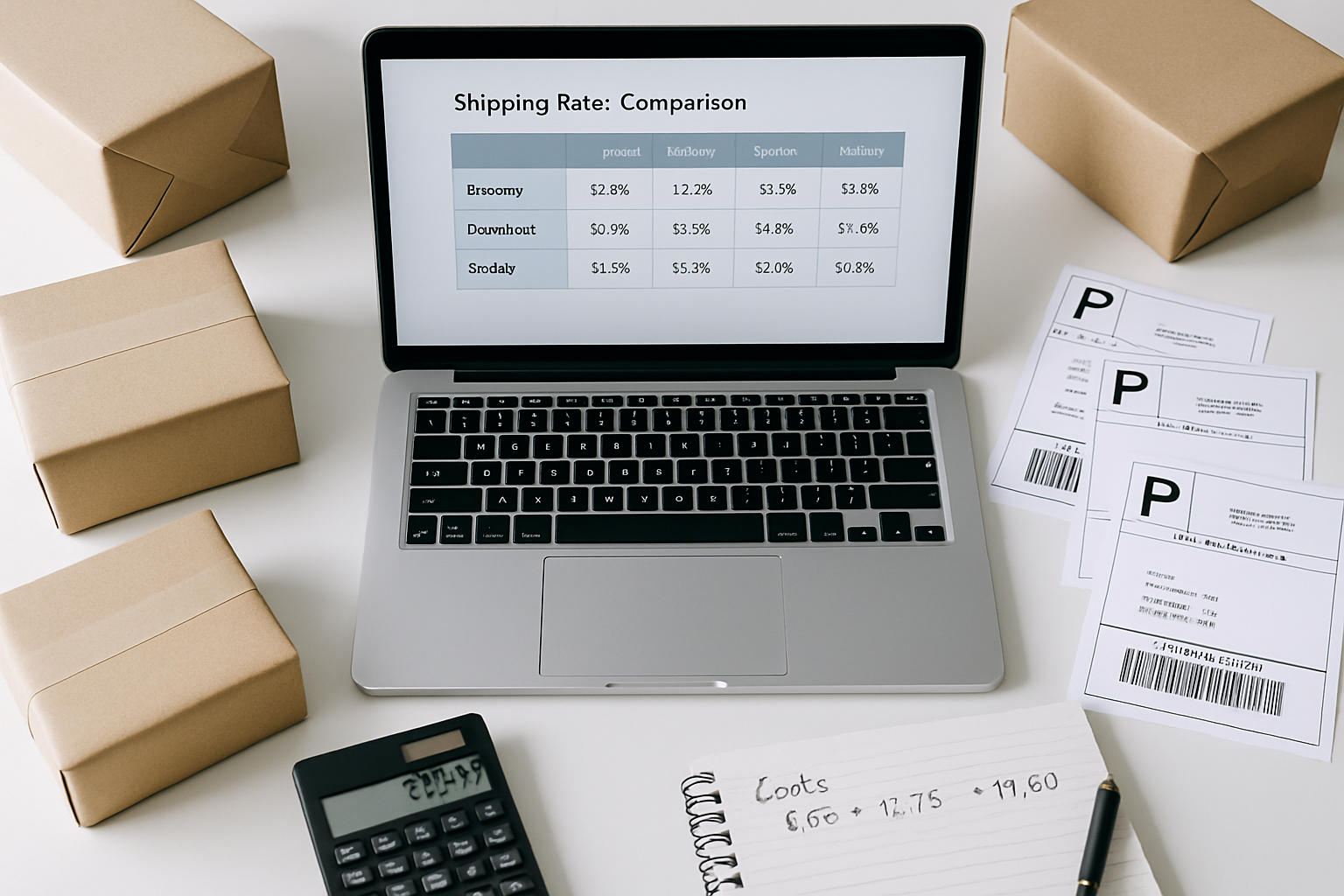
Let's talk actual dollars, because that's what matters.
Imagine you sell outdoor gear and your average product weighs 3 pounds. With flat rate shipping at $8.95:
- Shipping to Billings costs you $6.50 (you profit $2.45)
- Shipping to Seattle costs you $9.20 (you lose $0.25)
- Shipping to New York costs you $12.80 (you lose $3.85)
On 100 orders, if 30 go out-of-state, you're potentially losing hundreds of dollars in shipping subsidies.
With real-time calculations, the customer in New York sees $12.80 at checkout and either accepts it or doesn't—but you're not eating the cost either way.
The flip side? Some customers will see that real-time rate and bounce. This is where strategies like how to offer free shipping without losing profit become crucial—you can use real-time rates on the backend while still presenting attractive shipping options to customers.
When Montana Businesses Should Choose Flat Rate
Flat rate makes sense if:
- Your products have consistent sizes and weights
- Most customers are regional (Montana and neighboring states)
- Your average order value is high enough to absorb occasional shipping losses
- You want to use "Free Shipping Over $X" promotions where you build shipping into product margins
- Simplicity and speed at checkout are your top priorities
Many successful Montana eCommerce businesses use flat rate for precisely this reason—when 70% of your customers are within a few hundred miles, the math works out.
Just make sure you're regularly reviewing your actual shipping costs against what you're charging. What worked when you were shipping 10 orders a week might not work at 100 orders.
When Real-Time Calculations Make More Sense
Real-time shipping is the better choice when:
- You sell products with widely varying weights and sizes
- You ship nationwide or internationally
- You're working with thin margins and can't afford to subsidize shipping
- You want to offer multiple carrier options (USPS, UPS, FedEx) at checkout
- Transparency and accuracy matter more than simplicity
If you're already working with multiple best shipping carriers for small eCommerce businesses, real-time calculations let you present all those options without manual updates every time rates change.
The setup investment pays off quickly when you're shipping diverse products to diverse locations.
The Hybrid Approach Most Successful Stores Actually Use
Here's the secret: you don't have to choose just one.
Many smart eCommerce operators use flat rate for local/regional shipping and real-time calculations for everything else. Or they use flat rate for orders under a certain weight threshold and real-time for heavier items.
Your eCommerce platform (Shopify, WooCommerce, BigCommerce) can handle these conditional rules. It takes more initial setup, but it optimizes for both customer experience and your bottom line.
You might also offer flat rate as the "default" option but give customers the choice to see real-time carrier rates if they want faster delivery. This gives control to the customer while protecting your margins.
The key is testing and measuring. Watch your shipping costs as a percentage of revenue. If it's creeping above 8-10% consistently, your flat rate isn't sustainable. If your cart abandonment spikes when you switch to real-time, your customers are price-sensitive and you need to adjust your strategy—possibly through reducing eCommerce shipping costs for SMBs so real-time rates are more palatable.
Implementation Tips for Getting This Right
Whichever direction you go, here's how to avoid the common pitfalls:
For flat rate: Calculate your true average shipping cost over the last 90 days, add 15% buffer, and that's your flat rate. Review quarterly and adjust as needed. Don't forget that return shipping costs matter too—check out handling returns and reverse logistics for online stores to factor this into your total shipping strategy.
For real-time: Invest time in getting product weights and dimensions accurate in your system. Use dimensional weight, not just actual weight. Test the checkout flow from different zip codes before going live. Consider rounding rates to the nearest dollar to feel less "calculated" and more like a standard fee.
Both methods benefit from clear communication. Tell customers at the product page what to expect at checkout. If you're using flat rate, say "Flat Rate Shipping: $7.95 to anywhere in the U.S." If you're using real-time, say "Shipping calculated at checkout based on your location."
Making Your Final Decision
The right answer depends entirely on your specific business model, product mix, and customer base.
Start by analyzing your last 100 orders. Where did they go? What did they weigh? What did shipping actually cost you? Compare that to what you charged (or would have charged) using each method.
The numbers will tell you the answer faster than any article can.
For most Montana businesses shipping lightweight products regionally, flat rate offers simplicity and marketing advantages. For businesses with diverse catalogs shipping nationwide, real-time calculations protect margins and scale better.
And remember—you can always change your approach as your business evolves. What works at 50 orders a month might not work at 500.
If you're still wrestling with the decision or want help setting up either system in your eCommerce platform, that's exactly the kind of nuts-and-bolts marketing challenge we solve at Agency 220. Reach out, and let's make sure your shipping strategy is actually supporting your growth instead of silently killing it.