Handling Returns and Reverse Logistics for Online Stores: Turn Your Biggest Headache Into a Competitive Advantage
Learn how to turn eCommerce returns from a profit drain into a competitive advantage with smart reverse logistics strategies.
Returns will happen. Period. In eCommerce, they're not a bug—they're a feature. The question isn't whether you'll deal with returns, but whether your process makes customers want to buy from you again or warn their friends to stay away.
The average return rate for online purchases hovers around 20-30%, and during peak seasons like the holidays, that number climbs even higher. For Montana retailers expanding into eCommerce, that means one out of every four or five packages you send out might come back. If your reverse logistics strategy is an afterthought, you're bleeding profit and trust with every return.
Here's the reality: a smooth return experience can actually increase customer lifetime value. Studies show that 92% of consumers will buy again if the return process is easy. Mess it up, and you've lost them forever—along with everyone they tell about their nightmare experience.
What Reverse Logistics Actually Means (and Why It Matters)
Reverse logistics is the entire journey a product takes from your customer back to you—and what happens after. It includes return authorization, shipping labels, receiving and inspecting returned items, restocking, refurbishing, or disposing of products, and processing refunds or exchanges.
Most small online stores treat this like an annoying cleanup task. Big mistake. Your reverse logistics process directly impacts your margins, inventory accuracy, customer satisfaction, and even your environmental footprint.
Think of it as the other half of your eCommerce shipping strategies for small business. You've optimized getting products to customers—now optimize getting them back.
Build a Return Policy That Protects You AND Your Customers
Your return policy is your first line of defense and your first impression. Make it too strict, and you'll scare away cautious buyers. Make it too loose, and you'll attract serial returners who treat your store like a free rental service.
Here's what works for most small online businesses:
- Clear timeframe: 30 days is standard, 60-90 days is generous (and competitive)
- Condition requirements: Unworn, unwashed, tags attached, original packaging—be specific
- Who pays shipping: Customer pays for buyer's remorse, you cover defects or errors
- Refund method: Original payment method, store credit, or exchange—state your default
- Exclusions: Final sale items, personalized products, perishables—list them upfront
Post this policy prominently on product pages, checkout, and confirmation emails. Hiding it in fine print creates friction and distrust.
For Montana businesses shipping regionally, consider offering free return shipping within state lines as a competitive edge. The cost is minimal compared to the goodwill it builds with local customers.
Streamline Your Return Authorization Process
Every extra step in your return process is a chance for customers to get frustrated or you to lose control of inventory. Start with a simple return merchandise authorization (RMA) system.
This can be as basic as a Google Form or as sophisticated as automated software integrated with your eCommerce platform. The goal: capture the order number, reason for return, and preferred resolution before the item ships back.
Knowing why items are being returned is gold. Track these reasons religiously. If you're seeing patterns—like "wrong size" on a specific product—you've got a product description problem or a sizing chart issue, not a return problem.
Automate as much as possible. Platforms like Shopify, WooCommerce, and BigCommerce offer return apps that generate prepaid labels, update inventory, and trigger refunds automatically. If you're processing more than a handful of returns per month, the time savings alone justifies the expense.
The Economics of Return Shipping Labels
Who pays for return shipping is one of the most debated questions in eCommerce—and for good reason. It directly impacts your bottom line and your conversion rate.
Offering free return shipping can increase sales by 15-20%. Customers are more confident buying when they know returns won't cost them extra. But every free return label is coming out of your margin.
Here's the strategic approach: offer free returns on your first-time buyers to reduce purchase anxiety, then evaluate the actual return rate. If it's under 10%, consider making free returns standard. If it's higher, offer free returns only on defects or errors on your end.
Work with your carrier to negotiate bulk return label rates. The same tactics you use for reducing eCommerce shipping costs for SMBs apply to reverse logistics—volume matters. Don't assume your outbound carrier offers the best return rates. Sometimes best shipping carriers for small eCommerce businesses differ for returns versus standard shipments.
Consider requiring customers to drop off returns at a carrier location instead of offering home pickup. It's cheaper for you and weeds out the least committed returners.
Inspect, Process, and Restock with Speed
Every day a returned item sits in your receiving area is a day it's not available for sale. Speed matters in reverse logistics as much as forward shipping.
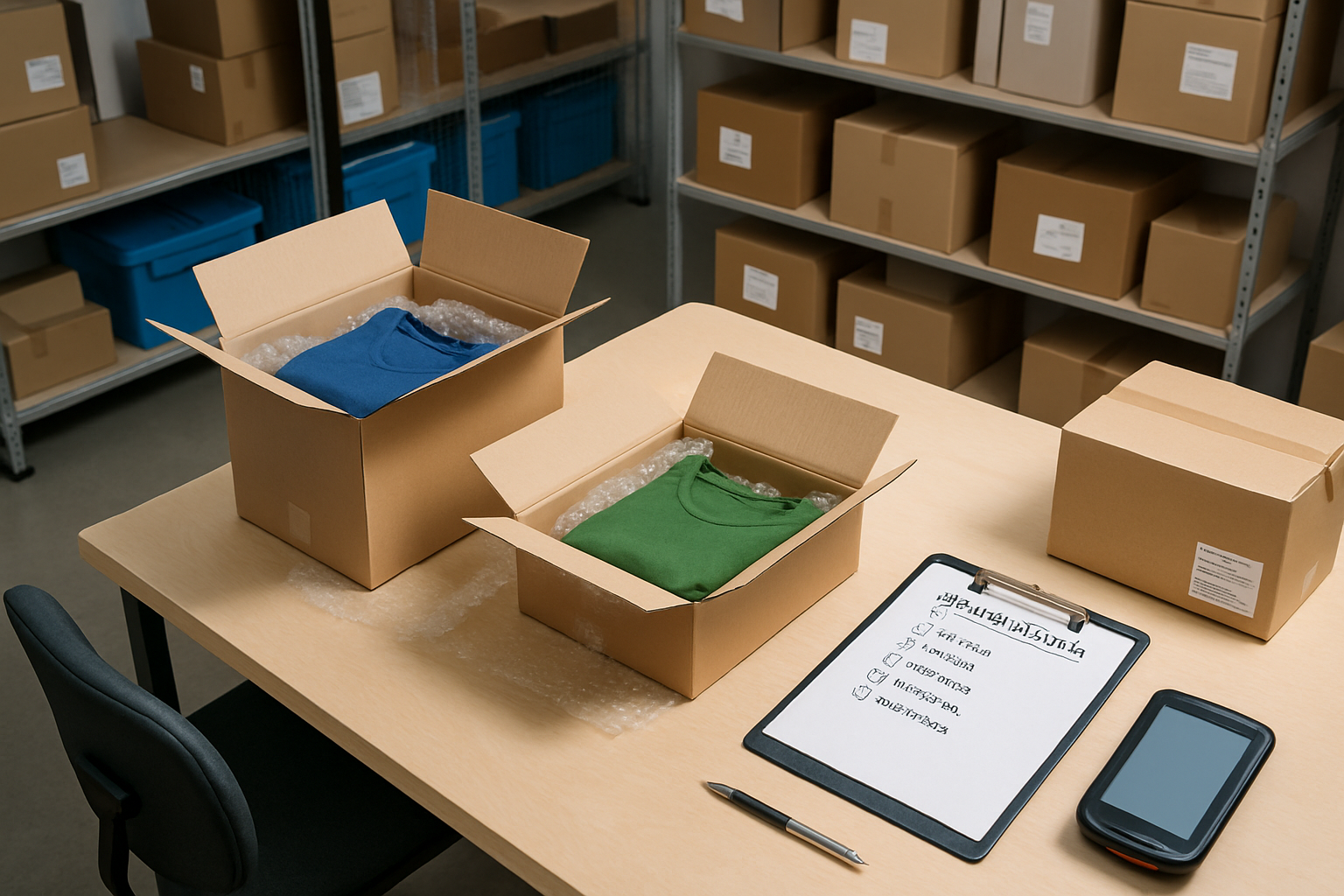
Set a rule: inspect and process returns within 24-48 hours of receipt. Create a simple checklist for your team:
- Verify the RMA matches the return
- Inspect item condition against your policy
- Document any damage or missing components
- Make restock, refurbish, or disposal decision
- Update inventory immediately
- Process refund or exchange within your stated timeframe
Items that can't be resold as new need a plan. Can you sell them at a discount as "open box"? Donate them for a tax write-off? Liquidate through a secondary channel? Having clear rules prevents paralysis and pile-up.
For Billings-based businesses, consider partnering with local thrift stores or nonprofits for items that can't be resold. It's good for the community and often more cost-effective than disposal fees.
Turn Data Into Better Decisions
Your return data is trying to tell you something. Listen to it.
Track these metrics monthly:
- Return rate by product and category
- Return reasons (percentage breakdown)
- Average time from return request to refund processed
- Restocking rate (percentage of returns that can be resold)
- Return shipping costs as percentage of revenue
A sudden spike in returns for a specific product? That's a quality issue, a misleading description, or a sizing problem you need to fix immediately.
High return rates on items you're promoting with how to offer free shipping without losing profit strategies? You might be attracting bargain hunters with higher return tendencies. Adjust your promotions accordingly.
Returns aren't failures—they're feedback loops. Use them to improve product descriptions, photography, sizing information, and quality control.
The Customer Experience Doesn't End at the Return
How you handle a return determines whether that customer ever comes back. Make it painful, and they're gone. Make it effortless, and you've earned loyalty that transcends the original purchase.
Communicate proactively. Send confirmation when you receive the return. Send updates when you process it. Send the refund confirmation. Every touchpoint is an opportunity to reinforce that you're trustworthy and customer-focused.
Consider offering exchanges before refunds. A customer returning a shirt in the wrong size probably still wants the shirt—just in a different size. Make that swap easy, and you've saved a sale.
For high-value customers or expensive items, pick up the phone. A two-minute conversation can resolve issues, prevent fraudulent returns, and create connection that email never will.
Make Reverse Logistics Part of Your Competitive Strategy
Your competitors are treating returns as a necessary evil. You can treat them as a competitive advantage.
Promote your hassle-free return policy on product pages and in marketing. Make it easy to find. Make it simple to understand. Make it generous enough to remove purchase anxiety.
Big retailers have trained customers to expect free, easy returns. You can't out-Amazon Amazon, but you can out-service them with speed, personal touch, and flexibility.
Remember: handling returns and reverse logistics for online stores isn't about avoiding returns—it's about managing them so efficiently that they strengthen rather than weaken your business. Get this right, and returns become just another operational strength in your overall eCommerce shipping strategies for small business.
Build systems now that scale with your growth. Your future self—and your bottom line—will thank you.