Community Event Marketing for Business Leads: How Montana Businesses Can Turn Local Events Into Lead Magnets
Turn local events into lead magnets with proven community event marketing strategies that Montana businesses use to generate qualified leads.
Your competitor just walked away from the downtown street fair with 47 qualified leads. You got three business cards and a sunburn.
The difference wasn't luck. It was strategy.
Community event marketing for business leads is one of the most underutilized tactics in Montana's business landscape. While everyone's fighting over Google ads and social media impressions, local events offer something digital marketing can't: face-to-face conversations with people who already trust their community enough to show up.
Let's talk about how to make every booth, sponsorship, and handshake actually move the needle for your business.
Why Community Events Beat Digital Marketing for Certain Leads
Here's what happens when someone walks past your booth at the Billings Strawberry Festival or a Bozeman farmers market: they're already in buying mode. They've left their house, fought for parking, and they're actively looking to engage with local businesses.
That's a warmer lead than someone who accidentally clicked your Facebook ad while scrolling through cat videos.
Events create immediate trust. When you're standing behind a table with your team, wearing your company shirt, and answering questions in real-time, you're not some faceless website. You're a neighbor. A local business owner who cares enough to show up.
This face-to-face advantage complements your broader local business lead generation tactics, filling in gaps that purely digital strategies miss. You're building relationships that turn into referrals, repeat customers, and word-of-mouth marketing that money can't buy.
Choosing the Right Events for Your Business
Not every community event deserves your time. The church bake sale might be charming, but if you sell commercial HVAC systems, you're barking up the wrong tree.
Ask yourself three questions:
- Will my target customer actually attend this event?
- Does the event's vibe match my brand?
- Can I realistically stand out here?
A landscaping company crushing it at a home and garden show makes sense. That same company sponsoring a video game tournament? Not so much.
In Montana, think beyond the obvious. Yes, county fairs and trade shows work. But also consider:
- Chamber of Commerce mixers and business expos
- Charity runs and fundraising events
- School auctions and community fundraisers
- Seasonal festivals specific to your region
- Industry-specific conferences
The sweet spot is events where attendees are already thinking about problems you solve. Home shows for contractors. Health fairs for wellness businesses. Small business conferences for B2B service providers.
Setting Up a Booth That Actually Generates Leads
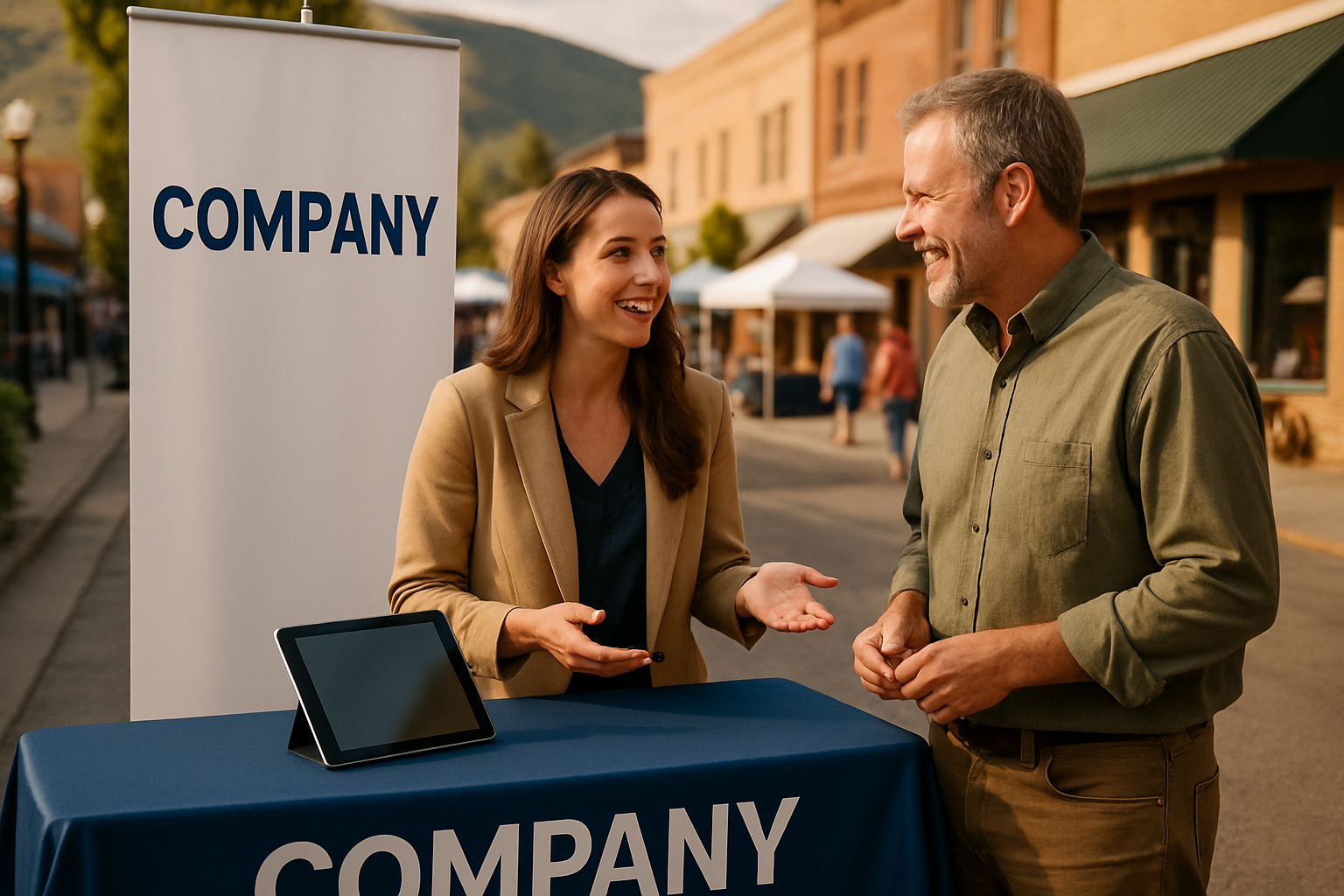
Your booth is not a billboard. It's a conversation starter.
Most businesses show up with a table, some brochures, and a bowl of mints. Then they wonder why everyone walks past. Here's how to stand out:
Create an irresistible offer. Not a business card. Not a brochure. Something people actually want right now. A free home energy audit. A complimentary landscape consultation. A download of your best resource guide. Make it valuable enough that giving you their contact info feels like a fair trade.
Make your booth interactive. Demos beat posters every time. If you sell something visual, show it working. If you provide a service, offer mini-consultations. One roofing company in Great Falls brought a drone and let people see aerial views of their own homes. Guess whose booth had a line?
Use lead capture that doesn't suck. Paper signup sheets look like 1987. Use a tablet with a simple form, a QR code that goes to a mobile-friendly landing page, or even a fishbowl for business cards tied to a specific prize. Just make sure you're capturing more than a name—get email, phone, and one qualifying question that tells you if they're actually a prospect.
Train your team. Your booth staff should ask questions, not recite features. "What brings you to the event today?" beats "Let me tell you about our services" every single time. Listen first. Pitch second.
Turning Event Contacts Into Actual Customers
Here's where most businesses fumble. They collect 50 business cards, stick them in a drawer, and call it a day.
The fortune is in the follow-up.
Within 48 hours of the event, every single lead should receive something. Email is fine. A personal text is better. A handwritten note is legendary. Reference the specific event and something memorable from your conversation if possible.
Your follow-up should include:
- A thank you for stopping by
- A reminder of the offer you discussed
- A clear next step (schedule a call, redeem a discount, download a resource)
- A deadline to create urgency
Then segment your leads. Not everyone who stopped by your booth is ready to buy today. Some are researching. Some are price shopping. Some just wanted the free tote bag.
Create a follow-up sequence that nurtures each type differently. Your hottest leads get a phone call. Warm leads get a targeted email sequence. Cold leads go into a long-term nurture campaign.
This approach works especially well when combined with partnership strategies with local businesses for referrals—you can cross-promote with other vendors you met at the event, expanding your reach exponentially.
Measuring What Actually Matters
You can't improve what you don't measure. Track these metrics for every event:
- Total leads collected
- Cost per lead (booth fee + materials + time)
- Qualified lead percentage
- Conversion rate from lead to customer
- Revenue generated from event leads
- Long-term customer value from event attendees
Be honest about what worked and what flopped. That expensive trade show might generate fewer qualified leads than the small neighborhood event. The booth design you loved might have confused visitors. The giveaway you thought was genius might have attracted freebie seekers instead of buyers.
After each event, hold a team debrief. What questions did people ask most? Which conversations turned into appointments? What competitor booths drew bigger crowds, and why?
Use these insights to optimize your next event. Double down on what works. Ditch what doesn't.
Integrating Events Into Your Bigger Marketing Strategy
Community event marketing for business leads works best when it's not a standalone tactic. It should connect to everything else you're doing.
Promote your event attendance beforehand on social media and email. Tell your existing customers you'll be there and give them a reason to stop by. Create event-specific landing pages that appear in your local SEO strategies to attract nearby customers.
During the event, post photos and videos to social media. Tag the event organizers. Use event hashtags. Go live if appropriate. Show you're active in the community.
After the event, share highlights. Post testimonials from people you met. Create content around questions you answered repeatedly at your booth. Update your Google Business Profile optimization for lead generation with event photos showing your community involvement.
Consider how event marketing can amplify your other channels. The leads you collect can feed into neighborhood direct mail campaigns that convert, especially if you're targeting specific ZIP codes around the event location.
Make Your Next Event Count
Community event marketing isn't about showing up with a smile and hoping for the best. It's about strategic planning, intentional engagement, and relentless follow-up.
The Montana businesses winning at events understand they're not just collecting business cards—they're building relationships with people who live, work, and shop locally. They're creating moments that digital marketing simply can't replicate.
Start small. Pick one event this quarter. Plan your booth, train your team, and track your results. Then refine and repeat.
Need help building a complete lead generation system that includes event marketing, digital tactics, and everything in between? Agency 220 helps Montana businesses create marketing strategies that actually fill the pipeline. Let's talk about what's possible for your business.