Neighborhood Direct Mail Campaigns That Convert: A Montana Business Owner's Guide
Learn how Montana business owners create neighborhood direct mail campaigns that convert with targeting, timing, and tested tactics that actually work.
Your competitor just landed three new clients from a single postcard drop. Meanwhile, your last direct mail piece got tossed faster than a snowball in July. The difference? They understood something most Montana business owners miss: direct mail still works—when you do it right.
While everyone's chasing the latest digital trend, smart local businesses are quietly building profitable customer bases with targeted neighborhood direct mail campaigns. But here's the thing: slapping your logo on a flyer and hoping for the best is a recipe for wasted money.
Let's talk about how to actually make direct mail work for your business.
Why Neighborhood Direct Mail Still Crushes Digital for Local Businesses
Before we dive into tactics, let's address the elephant in the room. Yes, digital marketing is essential—Google Business Profile optimization for lead generation and local SEO strategies to attract nearby customers absolutely deserve your attention. But direct mail has advantages that digital can't touch.
Physical mail gets noticed. The average American receives just 2-3 pieces of personal mail per week, compared to 121 emails per day. Your postcard doesn't compete with 50 other tabs in someone's browser—it sits on their kitchen counter where they'll see it multiple times.
Plus, direct mail targets geography in a way digital advertising struggles to match. When you own a landscaping business in Billings, you don't want leads from Bozeman. You want the homeowner three streets over who drives past your work truck every morning.
The Foundation: Choosing the Right Neighborhoods
This is where most campaigns fall apart before they even start. You can't mail to everyone and expect results—you'll blow your budget before you see a single conversion.
Start by analyzing your current customer base. What neighborhoods do your best clients live in? Look for patterns in income level, home values, and property types. If you're a high-end remodeler, you're wasting money mailing to apartment complexes.
Use USPS's Every Door Direct Mail (EDDM) tool to identify carrier routes that match your ideal customer profile. You can filter by average income, home value, age, and household size. For most Montana businesses, targeting 500-1,000 homes per drop gives you enough volume to test without breaking the bank.
Pro tip: Drive the routes you're considering. Does the neighborhood match what the data says? Are there signs of the problems your business solves? This ground-level research beats demographic data every time.
Crafting Direct Mail That Actually Gets Read
Here's the brutal truth: you have about three seconds to convince someone not to throw your mail away. That means every element of your piece needs to earn its space.
The headline is everything. Forget clever wordplay—clarity beats creativity. "New Roofing Company in Town!" loses to "Is Your Roof Ready for Another Montana Winter?" every single time. Speak directly to a problem your neighbor is facing right now.
Your offer needs to be specific and valuable. "Free consultation" is white noise at this point. Try "Free 47-Point Roof Inspection (Reg. $297)" or "$500 Off Spring Projects Booked This Month." Give people a reason to act now, not someday.
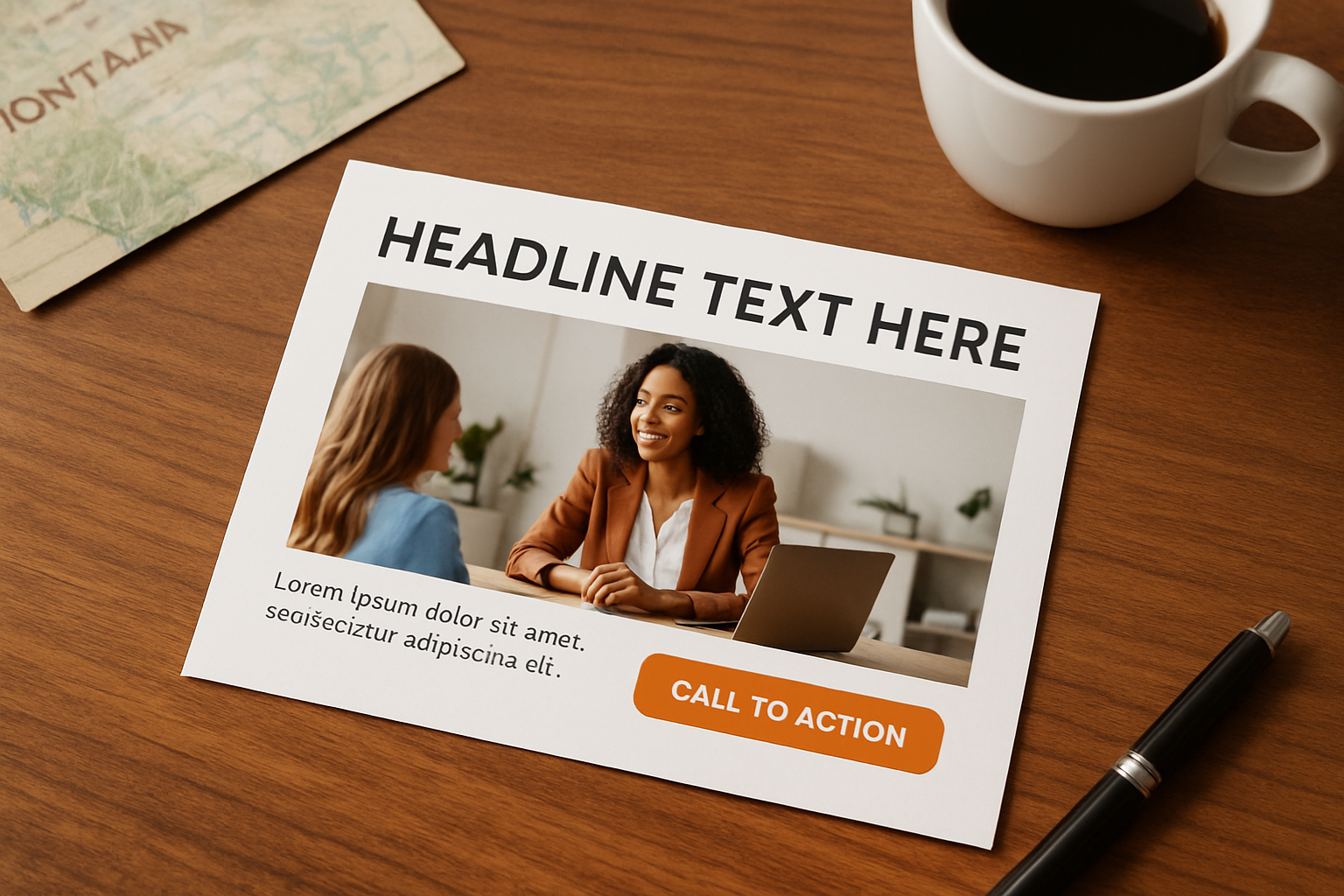
Keep your design clean and focused. One clear message, one strong image, one call-to-action. If you're trying to promote three different services on one postcard, you're promoting zero services effectively.
Include a clear next step that feels easy. A QR code that goes straight to your booking calendar works better than asking people to visit your homepage and figure out what to do next. The less friction, the more conversions.
Timing and Frequency: The Secret Sauce
Sending one piece of mail to a neighborhood is like running one ad on the radio—almost nobody will remember it. Neighborhood direct mail campaigns that convert follow a sequence.
Plan at least three touches to the same addresses over 6-8 weeks. The first piece introduces you and your offer. The second reminds them and adds social proof. The third creates urgency with a deadline or limited-time bonus.
Seasonal timing matters in Montana. HVAC companies should hit mailboxes in early fall (furnace concerns) and late spring (AC season). Landscapers win by mailing in late winter when homeowners are dreaming about their yards. Roofers should mail right after the first big storm of the season.
As part of your broader local business lead generation tactics, coordinate your direct mail with your digital presence. When someone sees your postcard and then finds you dominating Google search results, your credibility skyrockets.
Tracking Results and Improving Performance
If you can't measure it, you can't improve it. Every campaign needs a tracking mechanism built in from day one.
Use unique phone numbers for each neighborhood or drop date. This costs about $2/month per number through services like CallRail and tells you exactly which campaigns drive calls. Alternatively, use unique URLs or promo codes specific to each mail piece.
Track beyond just immediate responses. Some people sit on postcards for weeks before acting. Note the date ranges of your drops and watch for spikes in website traffic, phone calls, or appointment bookings in the following 4-6 weeks.
Calculate your actual cost per lead and cost per customer—not just the printing and postage costs. If you spent $800 on a drop and landed two $3,000 projects, that's a winner. Keep running that exact campaign.
Integration with Other Local Marketing Tactics
Direct mail doesn't work in isolation. The most successful Montana businesses layer their marketing tactics for maximum impact.
When you're running a neighborhood mail campaign, double down on your digital presence in that same area. Make sure your Google Business Profile optimization for lead generation is dialed in so when people search for you after seeing your mail, you own the results page.
Consider combining your direct mail with community event marketing for business leads. Mail postcards announcing you'll be at the local farmers market or sponsoring a youth sports team. This builds credibility and gives people multiple touchpoints with your brand.
Build relationships with complementary businesses through partnership strategies with local businesses for referrals. When the realtor in your target neighborhood mentions your roofing company to new homeowners, your direct mail piece becomes a reminder instead of a cold contact.
Common Mistakes That Kill Conversion Rates
Let's talk about what not to do, because I see Montana businesses making these mistakes constantly.
Mistake #1: Making it about you instead of them. Nobody cares that you're family-owned since 1987. They care whether you can solve their problem faster, better, or cheaper than the other guy.
Mistake #2: Skimping on design to save money. A $0.35 postcard that looks like it was designed in 1997 Word Art won't save you money—it'll waste the $0.60 you spent on printing and postage because nobody will read it.
Mistake #3: Mailing once and giving up. Direct mail is a relationship-building tool. The fortune is in the follow-up.
Mistake #4: No clear call-to-action. What exactly do you want people to do after reading your piece? Call? Visit a website? Scan a code? Pick one and make it obvious.
Making Direct Mail Work for Your Montana Business
Neighborhood direct mail campaigns that convert aren't magic—they're strategic. They start with the right neighborhoods, deliver clear messages that solve real problems, and follow up consistently over time.
The businesses winning with direct mail in Montana aren't outspending everyone else. They're out-thinking the competition by treating every piece of mail as part of a larger lead generation system that includes digital marketing, community involvement, and relationship building.
Start small. Pick one neighborhood. Create one great offer. Mail three times over six weeks. Track everything. Then scale what works.
If you're ready to build a complete lead generation system that combines direct mail with digital tactics that actually work for Montana businesses, let's talk. At Agency 220, we help Billings businesses create marketing strategies that generate real customers—not just likes and impressions. Visit us at agency220.com or give us a call to discuss how we can help your business grow.