Using Landing Pages to Capture Leads Effectively: A Small Business Guide
Learn how to build landing pages that actually convert visitors into qualified leads for your small business.
You've got traffic coming to your website. Maybe you're running ads, posting on social media, or ranking well for a few keywords. But here's the problem: those visitors are leaving without giving you their contact information. You're basically paying for window shoppers who never come back.
That's where landing pages come in. When done right, they're the difference between burning your marketing budget and building a real list of qualified leads who actually want to hear from you.
Landing pages aren't just another web page—they're purpose-built conversion machines designed to do one thing well: turn visitors into contacts. And for small businesses in Billings and beyond, they're one of the most cost-effective tools in your lead generation strategies for small business arsenal.
What Makes a Landing Page Different from Your Homepage
Your homepage tries to do everything. It welcomes visitors, explains your services, shows your portfolio, links to your blog, and offers seventeen different paths forward. That's fine for general browsing, but it's terrible for conversion.
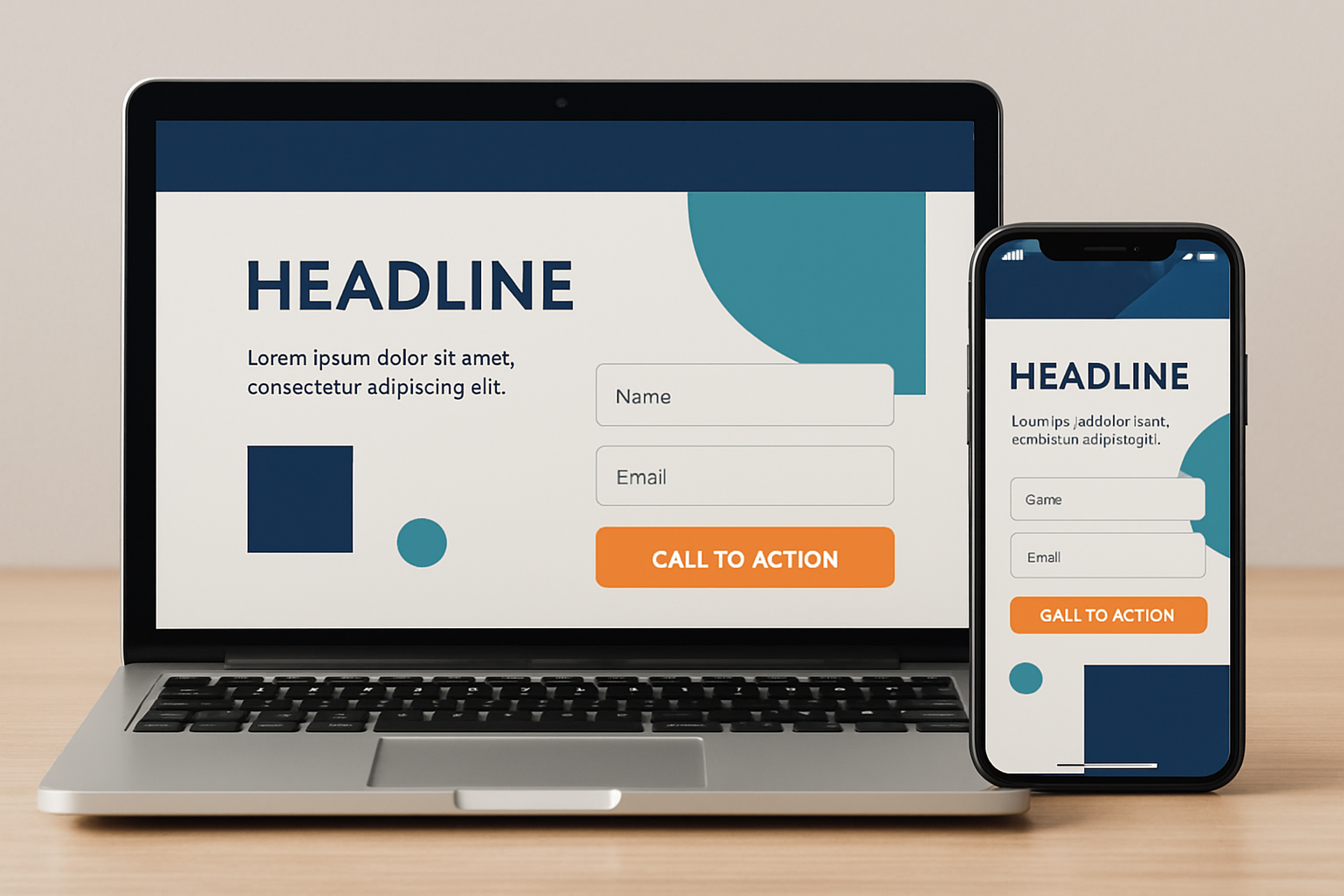
A landing page is the opposite. It has one goal, one offer, and one call-to-action. No navigation menu. No footer links to your about page. No distractions. Just a focused message that says "Here's what you get, and here's how to get it."
Think of it this way: your homepage is a buffet. Your landing page is a single, perfectly plated dish.
The Essential Elements Every Lead-Capture Landing Page Needs
A Headline That Immediately Answers "What's In It for Me?"
You have about three seconds to convince someone to stick around. Your headline needs to clearly communicate the benefit they'll receive—not what you do, but what they get.
Weak: "Download Our Free Guide"
Strong: "Get the 7-Step Checklist That Helped 200+ Montana Businesses Double Their Leads"
A Single, Compelling Offer
This is where how to create a lead magnet that converts becomes critical. Your offer needs to solve a specific problem for a specific person. It could be a checklist, template, calculator, webinar, consultation, or discount—but it needs to provide immediate value.
The best lead magnets are:
- Specific (not "improve your marketing" but "increase Instagram engagement by 40% in 30 days")
- Actionable (they can use it right away)
- Quick to consume (nobody wants to read a 50-page ebook before seeing results)
- Relevant to your paid services (attract the right leads, not just any leads)
Minimal Form Fields
Every field you add to your form decreases conversion rates. For most small businesses, name and email are enough to start. You can always ask for more information later once you've built trust.
If you absolutely need a phone number or company name, test it. But remember: the goal is to start the conversation, not collect a resume.
Social Proof That Builds Trust Fast
Testimonials, client logos, numbers ("Join 500+ local businesses"), or media mentions all work. But they need to be specific and relevant to your offer.
Generic praise doesn't move the needle. "This company is great!" means nothing. "This checklist helped us identify $15K in wasted ad spend in under an hour" tells a story.
A Crystal-Clear Call-to-Action
Your button text matters more than you think. "Submit" is boring. "Download Now," "Get My Free Template," or "Send Me the Guide" are all more compelling because they reinforce what the visitor gets.
Make your button stand out visually, repeat it if the page is long, and remove any friction from the process.
How to Drive Traffic to Your Landing Page
A perfect landing page is useless if nobody sees it. Here's where it fits into your overall strategy.
If you're running paid ads—Facebook, Google, LinkedIn—send that traffic directly to a dedicated landing page, not your homepage. The message in your ad should match the message on your landing page exactly. Consistency kills confusion.
For organic traffic, create blog content that naturally leads to your offer. Write about the problem your lead magnet solves, then link to the landing page as the next step. That's how this entire article cluster works—different angles on lead generation, all supporting each other.
Email is another goldmine. Once you've captured leads through one landing page, you can use email marketing tactics to generate qualified leads to drive them to additional offers and deepen the relationship.
Don't sleep on social media, either. A well-crafted post with a link to your landing page can work wonders, especially if you're targeting local audiences. For tactics specific to platforms like Facebook and Instagram, check out our guide on social media lead generation tips for local businesses.
Common Landing Page Mistakes Small Businesses Make
Even with all the right elements, it's easy to sabotage your own conversion rates. Watch out for these traps.
Too much text. You're not writing a novel. Keep it scannable. Use bullet points, short paragraphs, and plenty of white space.
No mobile optimization. More than half your traffic is probably on a phone. If your form is hard to fill out on mobile, you're losing leads.
Asking for too much too soon. Save the detailed questions for after they've downloaded the guide. First, just get permission to start the conversation.
Slow load times. If your page takes more than three seconds to load, people bail. Compress images, minimize scripts, and test your speed.
No follow-up plan. Capturing the lead is just step one. If you don't have a system to follow up—whether that's automated emails or a CRM workflow—you're wasting the effort. Tools like those covered in best CRM software for small business lead tracking make this seamless.
Testing and Improving Your Landing Page Over Time
Your first landing page won't be perfect. That's fine. The goal is to launch, learn, and iterate.
Start by testing one thing at a time. Change your headline and see what happens. Try a different button color. Swap out your hero image. Add or remove a testimonial.
Key metrics to watch:
- Conversion rate (percentage of visitors who fill out the form)
- Traffic source (where your best leads are coming from)
- Time on page (are people actually reading or bouncing immediately?)
- Form abandonment (are people starting the form but not finishing?)
Small improvements compound. A landing page that converts at 3% is good. One that converts at 6% doubles your leads with the same traffic.
Start Capturing Leads That Actually Turn Into Customers
Using landing pages to capture leads effectively isn't complicated, but it does require focus. One clear offer, one specific audience, one compelling reason to act. Strip away everything else.
When you combine a strong landing page with the other tactics in your lead generation toolkit—great content, targeted ads, smart email follow-up—you create a system that consistently brings in qualified prospects who are already interested in what you offer.
And that's the difference between hoping for leads and actually generating them.
If you're ready to build landing pages that convert and plug them into a complete lead generation system, Agency 220 can help. We work with small businesses throughout Montana to create marketing strategies that actually drive revenue. Let's talk about what's possible for your business—reach out today.