How to Actually Track Print Advertising Effectiveness (Without Guessing)
Stop guessing whether your print ads work. Learn practical methods to track print advertising effectiveness and prove ROI.
You just spent $2,500 on a quarter-page ad in the Billings Gazette. Three weeks later, someone walks into your shop and says they "saw you somewhere." Was it the newspaper? A billboard? Their cousin's Facebook post? You have no idea—and that uncertainty makes it almost impossible to know if your print budget is working or wasting money.
Here's the reality: most Montana business owners treat print advertising like throwing darts blindfolded. They run an ad, hope for the best, and maybe notice a small uptick in foot traffic. But hope isn't a strategy, and gut feelings don't justify next quarter's marketing budget. The good news? Tracking print advertising effectiveness is absolutely possible—you just need the right systems in place before your ad even goes to press.
Table of Contents
Why Tracking Actually Matters for Your Bottom Line
Before we dive into the how, let's address the why. Tracking print advertising effectiveness isn't just about satisfying curiosity—it's about making smarter decisions with limited resources. When you know which ads drive revenue and which ones fall flat, you can double down on what works and cut what doesn't.
This is especially critical when you're weighing when to use print vs digital advertising. Digital campaigns offer built-in analytics dashboards, but print requires intentional tracking mechanisms. Without them, you're essentially flying blind while your competitors optimize their way to better ROI.
For Montana businesses, where marketing budgets tend to be tighter and local trust runs deeper, every dollar counts. You can't afford to keep running the same newspaper ad year after year just because "we've always done it that way."
Use Unique Phone Numbers and Promo Codes
The simplest way to track print advertising effectiveness is to give each campaign its own unique identifier. This means using different phone numbers, promo codes, or both for each print placement.
Let's say you're running ads in both the Billings Gazette and Montana Living magazine. Set up a Google Voice number (or use a call tracking service) specifically for the Gazette ad, and a different number for the magazine. When calls come in, you'll know exactly which publication drove them.
The same logic applies to promo codes. Instead of generic "SAVE10" codes, use campaign-specific codes like "GAZETTE25" or "MONTANA15." Not only does this tell you where customers found you, but it also creates urgency and gives people a reason to act now rather than later.
Here's what works in practice:
- Use vanity URLs like YourBusiness.com/gazette or YourBusiness.com/offer2026
- Create QR codes that link to campaign-specific landing pages
- Include unique extension numbers on your main business line
- Offer different promotional values for different publications to see which audience converts better
Just make sure you're not making print ad design mistakes that undermine these tracking mechanisms—like using tiny QR codes nobody can scan or burying your phone number in small print.
Create Custom Landing Pages for Each Campaign
Dedicated landing pages are your secret weapon for tracking print advertising effectiveness. When someone types in the URL from your print ad, they should land on a page built specifically for that campaign—not your generic homepage.
This serves two purposes. First, it gives you clean data. Google Analytics will show you exactly how many people visited YourBusiness.com/billings-special versus YourBusiness.com/magazine-offer. Second, it creates a better user experience because the landing page messaging matches what they just read in the ad.
For Montana businesses, this is where you can get creative with local specificity. If you're running a campaign around a Billings event or seasonal promotion, your landing page should reflect that context. Someone who saw your ad during MontanaFair shouldn't land on a page that looks like it was made for a national audience.
Keep your landing pages simple and focused:
- One clear call-to-action (schedule a consultation, claim your offer, make a purchase)
- Form fields to capture how they heard about you
- Mobile-responsive design (yes, people will pull out their phones to type in your URL)
- Thank you page with next steps clearly outlined
This approach fits naturally into broader print advertising strategies for SMBs because it bridges the gap between offline discovery and online conversion.
Train Your Team to Ask Every Single Customer
Technology is great, but sometimes the best tracking method is embarrassingly simple: just ask. Train every person who interacts with customers—whether at the counter, on the phone, or via email—to ask one question: "How did you hear about us?"
This question should be baked into your sales process, not treated as an afterthought. Make it easy for your team by providing them with a simple form or dropdown menu in your CRM or point-of-sale system. Categories might include:
- Billings Gazette ad
- Montana Living magazine
- Direct mail piece
- Google search
- Referral from friend/family
- Drove by and saw the sign
- Other
The data won't be perfect—some customers won't remember, others were influenced by multiple touchpoints—but over time, you'll spot clear patterns. If 40% of new customers mention seeing your ad in a specific publication, that's actionable intelligence.
This human approach works especially well in Montana, where personal relationships and face-to-face interactions still drive a lot of business decisions. Your customers expect to be asked about their experience, so fold this question into your normal customer service routine.
Track Metrics That Actually Matter
Not all metrics are created equal when it comes to tracking print advertising effectiveness. Impressions and reach might make you feel good, but they don't pay the bills. Focus on metrics that tie directly to revenue:
Response Rate: How many people took action after seeing your ad? Calculate this by dividing the number of responses (calls, website visits, promo code redemptions) by the estimated circulation of the publication.
Cost Per Acquisition: What did you actually pay to acquire each new customer from this campaign? Take your total ad spend and divide it by the number of new customers attributed to that ad.
Customer Lifetime Value: Don't just look at the initial purchase. If your print ad brings in customers who stick around and buy repeatedly, the long-term ROI might be much higher than a one-time transaction suggests.
Attribution Window: Give your print campaigns time to work. Unlike digital ads that generate immediate clicks, print often has a longer runway. Someone might see your ad on Monday and call on Friday. Track responses for at least 30 days after publication.
When evaluating local newspaper advertising costs and benefits, these metrics help you move beyond sticker shock and assess true value. A $3,000 ad that brings in 15 new customers worth $500 each over their lifetime is a very different proposition than a $500 ad that generates zero measurable response.
Compare Print Performance Against Other Channels
The final piece of tracking print advertising effectiveness is context. How does print stack up against your other marketing efforts? You can't make smart allocation decisions unless you're comparing apples to apples across channels.
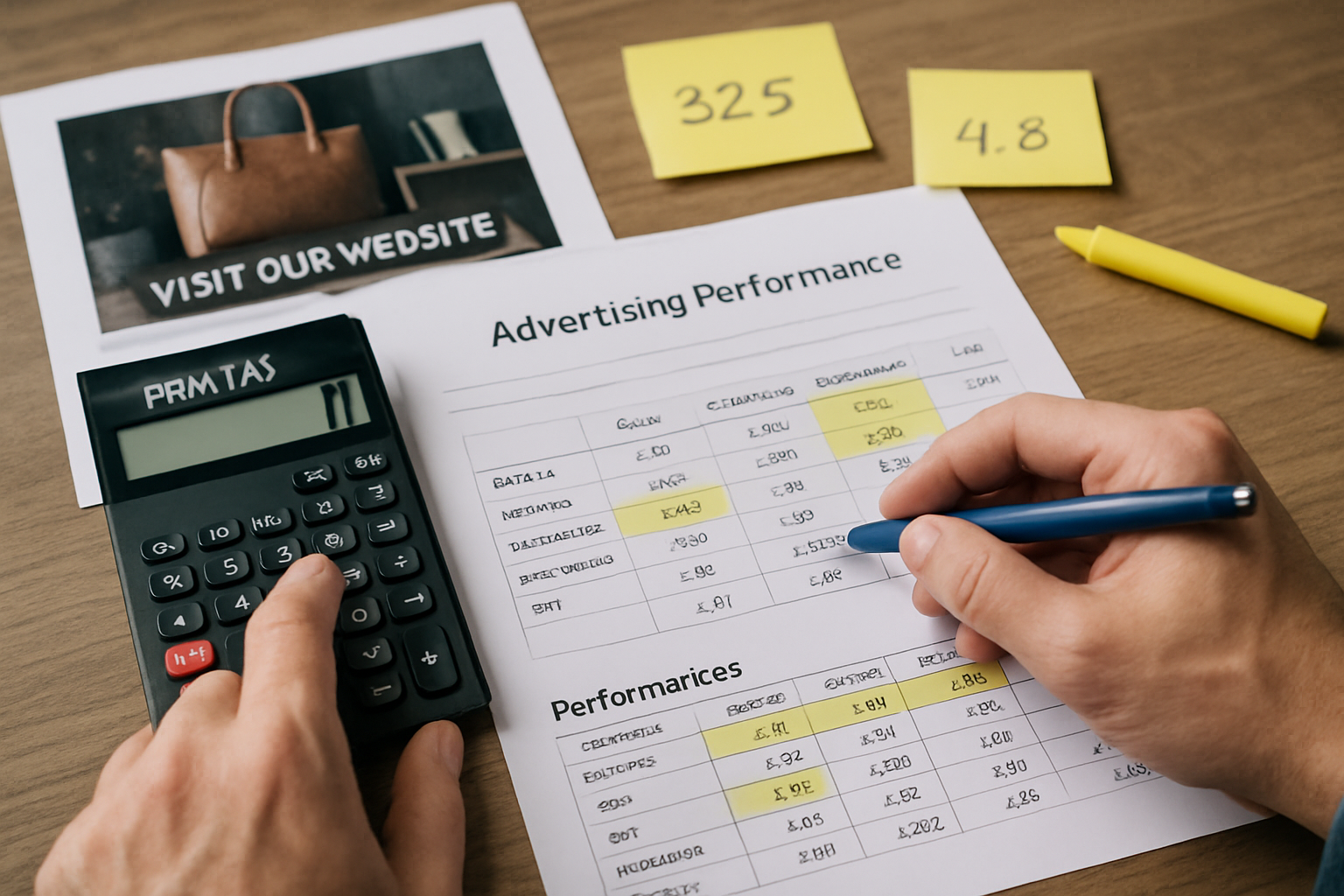
Build a simple spreadsheet that tracks every marketing initiative—print ads, Google Ads, social media campaigns, email marketing, direct mail. For each one, record:
- Total cost
- Number of leads or customers generated
- Revenue attributed to that channel
- Cost per acquisition
- Return on ad spend (ROAS)
This level of tracking reveals surprising insights. You might discover that your magazine ad placement strategy targeting niche markets brings in fewer leads than Google Ads, but those leads convert at 3x the rate and spend twice as much.
For Billings businesses specifically, print often outperforms in reaching certain demographics—older audiences, high-income households, and people who value local community connections. When you track properly, you can optimize your mix instead of abandoning print entirely or relying on it exclusively.
Stop Guessing, Start Measuring
Tracking print advertising effectiveness doesn't require expensive software or a marketing degree. It requires intentionality. Before your next ad runs, ask yourself: "How will I know if this worked?" Then build the tracking mechanisms to answer that question with data instead of guesswork.
Set up unique phone numbers. Create campaign-specific landing pages. Train your team to ask every customer where they came from. Track the metrics that matter. Compare performance across all your marketing channels.
When you approach print advertising this way, you transform it from a hopeful expense into a measurable investment. And in Montana's competitive small business landscape, that clarity makes all the difference.
Need help building tracking systems into your print campaigns? Agency 220 works with Montana businesses to create measurable marketing strategies that actually drive growth. Let's talk about what's working—and what's not—in your current advertising mix.