Content Calendar Planning for SEO: Your Blueprint for Consistent Ranking Success
Stop scrambling for content ideas. Learn how strategic content calendar planning for SEO drives consistent rankings and qualified traffic to your business.
Your competitor published three blog posts last month while you scrambled to write one. They're ranking for keywords you never targeted, capturing leads you didn't know existed, and building authority while your website gathers digital dust. The difference isn't talent or budget—it's planning.
Content calendar planning for SEO transforms sporadic publishing into strategic momentum. Without it, you're reacting instead of leading, guessing instead of executing, and watching opportunities slip to businesses that simply showed up more consistently.
Let's fix that.
Why Content Calendar Planning for SEO Isn't Optional
Here's the reality: Google rewards websites that publish quality content consistently. One viral post won't sustain your rankings. Three months of silence after a burst of activity signals to search engines that your site isn't actively maintained.
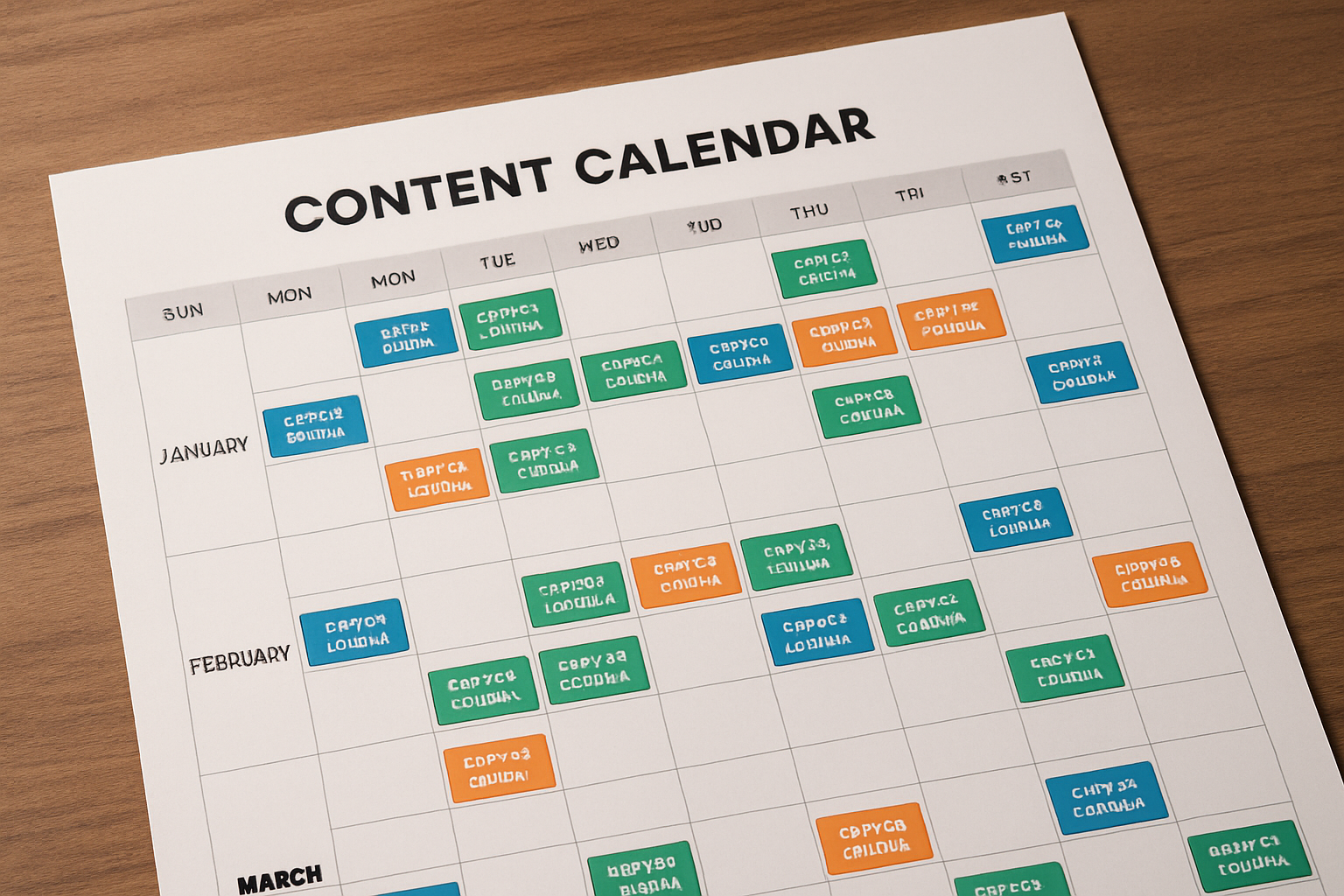
A content calendar solves this by creating a systematic approach to publishing. You map out topics, target keywords, publishing dates, and promotional channels before you write a single word. This advance planning ensures you're building toward specific SEO goals rather than chasing whatever topic feels urgent that week.
For small businesses in competitive markets like Billings, where local competition is fierce, a well-planned content calendar becomes your competitive advantage. While others publish sporadically, you're executing a deliberate SEO content strategy for small business that compounds over time.
Building Your Content Calendar Foundation
Start with your keyword research—not your gut feelings about what customers want. Use keyword research for content marketing to identify actual search queries your audience is typing into Google right now.
Document these keywords in a spreadsheet with columns for:
- Target keyword and search volume
- Content type (blog post, guide, video, case study)
- Planned publication date
- Internal links to include
- Promotional channels
- Assigned writer or creator
This becomes your master planning document. Don't just track what you're publishing—track why each piece exists and how it connects to your broader SEO goals.
Mapping Content to the Customer Journey
Your calendar should balance three content types strategically:
Top-of-funnel content targets broad, high-volume keywords that introduce prospects to your brand. These are educational pieces that answer common questions in your industry.
Middle-of-funnel content addresses comparison searches and solution evaluation. This is where you demonstrate expertise and differentiate your approach.
Bottom-of-funnel content captures commercial intent with long-tail keywords for small business like "best [service] in Billings" or "[product] vs [competitor]."
Your monthly calendar should include at least one piece from each stage. This ensures you're attracting new visitors while nurturing those already considering your services.
Seasonal Planning and Trend Anticipation
Montana businesses know the calendar matters. HVAC companies shouldn't start publishing furnace content in November—that content needs to rank in September when people start searching.
Map your calendar to seasonal trends specific to your industry. For retail businesses, plan holiday content 8-12 weeks before peak shopping dates. For service businesses, identify when customers typically search for your solutions and publish 6-8 weeks earlier.
Build in flexibility for trending topics, but don't let trends derail your core strategy. Reserve 70-80% of your calendar for planned, keyword-targeted content and leave 20-30% for timely opportunities.
Frequency That Actually Works
Publishing daily sounds impressive but creates unsustainable pressure that leads to burnout or declining quality. For most small businesses, aim for:
- 1-2 blog posts per week if you're building authority in a competitive space
- 2-3 posts per month if you're maintaining established rankings
- Weekly publishing minimum to signal active site maintenance to Google
Quality trumps quantity every time. One comprehensive, well-researched post that earns backlinks and ranks for multiple keywords delivers more value than five thin articles rushed to meet an arbitrary quota.
When you're learning how to write SEO-friendly blog posts, start with a sustainable pace. You can always accelerate later once your process is refined.
Content Batching and Production Workflow
The secret to consistent publishing isn't working harder—it's working in batches. Dedicate specific days to content creation:
Research day: Gather sources, compile data, outline multiple posts
Writing day: Draft 2-4 posts in one focused session
Editing day: Review, optimize, and schedule completed content
Promotion day: Share published content across channels
This approach reduces context-switching and keeps you ahead of your publishing schedule. You're never scrambling to write something the day it's supposed to publish.
Tracking Performance and Adjusting Your Calendar
Your content calendar isn't static—it should evolve based on what's actually working. Set up measuring content ROI and SEO performance checkpoints monthly.
Review which topics drove the most organic traffic, generated leads, or ranked faster than expected. Double down on those content types and keywords. Identify underperformers and either update them or shift future calendar focus elsewhere.
Track these metrics for each published piece:
- Organic traffic in first 30, 60, 90 days
- Keyword rankings for target terms
- Backlinks earned
- Conversion actions (form fills, calls, purchases)
- Social shares and engagement
Use these insights to inform next quarter's calendar. If how-to guides consistently outperform opinion pieces, plan more tutorials. If local keywords drive more qualified leads than national terms, adjust your keyword targeting.
Common Calendar Planning Mistakes to Avoid
Don't plan content around what you want to write—plan around what your customers are searching for. Your calendar should reflect keyword research, not executive preferences or pet topics.
Avoid the "January enthusiasm" trap where you plan 52 posts in the first week of the year, then abandon the calendar by March. Build a realistic calendar you can actually execute with your available resources.
Don't ignore republishing opportunities. Your calendar should include quarterly reviews of top-performing content for updates and improvements. Refreshed content often ranks faster than brand new posts.
Start Planning Tomorrow's Rankings Today
Content calendar planning for SEO isn't about controlling every detail—it's about creating the conditions for consistent progress. You're building momentum that competitors can't match with sporadic effort.
Start with a simple three-month calendar. Identify twelve keywords worth targeting, assign them to specific weeks, and commit to the schedule. You'll be amazed how much clarity emerges when you stop deciding what to write each week and simply execute against a plan.
The businesses ranking above you aren't smarter—they're just more consistent. Your content calendar makes consistency inevitable.
Need help building a content calendar that actually drives rankings and revenue? Agency 220 helps Montana businesses create and execute SEO content strategies that deliver measurable results. Let's talk about your goals and build a calendar that gets you there.