The Small Business Guide to Measuring Content ROI and SEO Performance
Stop guessing whether your content works. Learn how to track real ROI and prove your SEO efforts are paying off with metrics that matter.
You've been publishing blog posts for six months. Your marketing consultant swears content is working. But when you check your bank account, you're not seeing the difference. Sound familiar?
Here's the uncomfortable truth: 63% of small businesses can't accurately measure whether their content marketing is making them money. They're flying blind, pouring resources into strategies they can't prove are working. That ends today.
Measuring content ROI and SEO performance isn't about vanity metrics or complicated dashboards. It's about connecting the dots between the content you publish and the revenue that hits your account. Let's break down exactly how to do that.
Why Most Small Businesses Get Content ROI Wrong
Walk into any small business in Billings and ask the owner about their content performance, and you'll hear about page views. Maybe sessions. Occasionally, someone mentions "engagement."
None of that pays your bills.
The problem isn't that these metrics are useless—it's that they're incomplete. Page views tell you people showed up. They don't tell you if those people became customers. Without connecting content performance to actual business outcomes, you're just collecting data that makes you feel productive.
Real ROI measurement starts with a simple question: Did this content generate more revenue than it cost to create?
The Three Metrics That Actually Matter
Forget the 47-point dashboard. Focus on these three core measurements.
1. Organic Traffic to Conversion Rate
Your content attracts visitors through search engines. The real question is: what percentage of those visitors take meaningful action?
Track this by setting up goals in Google Analytics 4. Define what counts as a conversion for your business—newsletter signups, quote requests, phone calls, purchases. Then measure what percentage of your organic traffic completes those actions.
For most small businesses, a 2-5% conversion rate from organic traffic is solid. Above 5% means your content aligns beautifully with search intent. Below 2% means you're attracting the wrong audience or your offers aren't compelling enough.
2. Customer Acquisition Cost (CAC) from Content
Add up everything you spend on content: writer fees, your time, tools, photography. Divide that by the number of customers your content generated that month.
If you spent $2,000 on content and gained 10 customers who found you through organic search, your content CAC is $200. Compare that to your CAC from paid ads or other channels. Content should cost less to acquire customers over time—that's the whole point of building a strong SEO content strategy for small business.
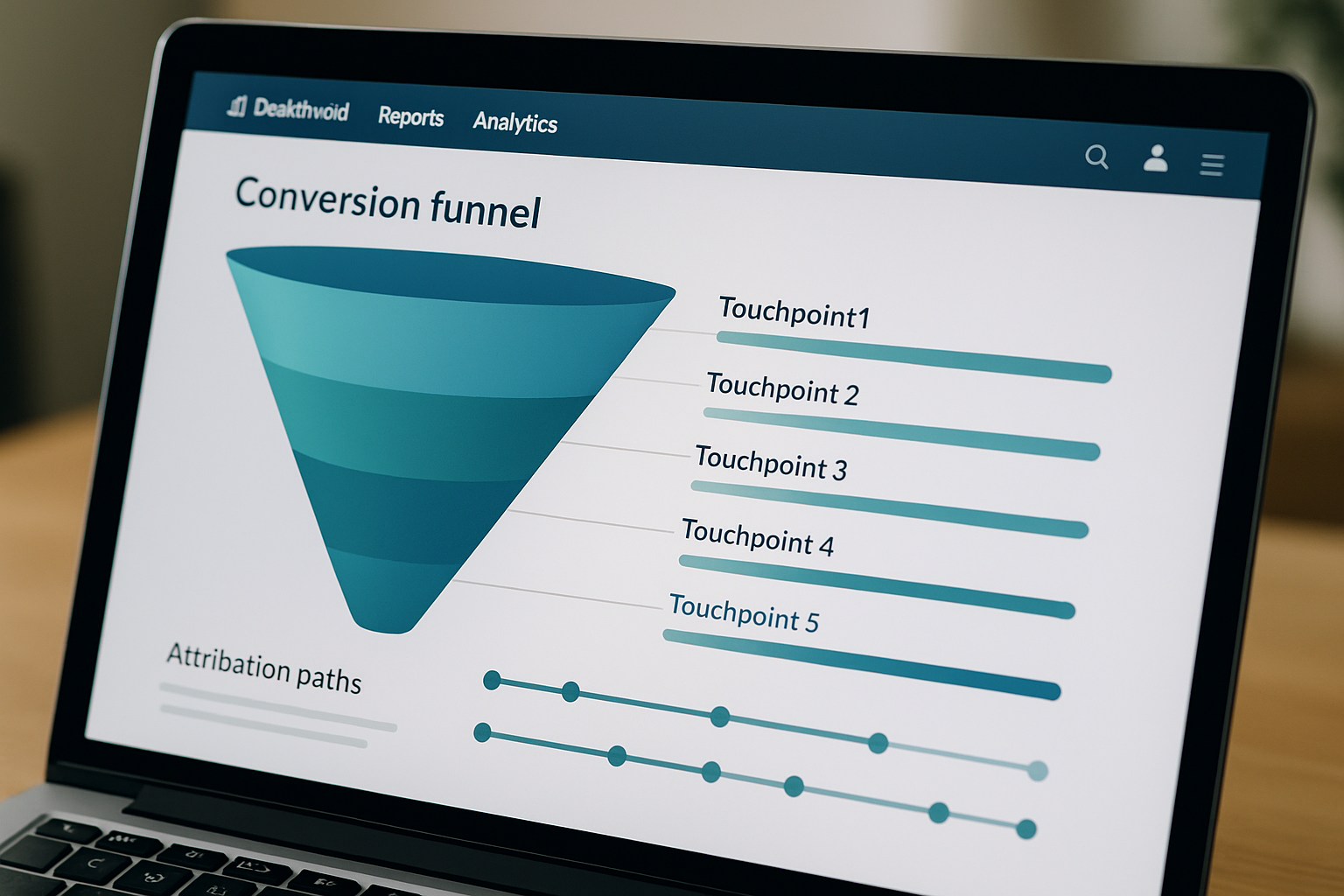
3. Assisted Conversions and Attribution
Most customers don't convert on their first visit. They read three articles, compare you to competitors, check reviews, then finally reach out two weeks later.
Google Analytics' attribution reports show you which content pieces played a role in eventual conversions, even if they weren't the final touchpoint. This reveals which articles are doing the heavy lifting in your customer journey.
Setting Up Your Measurement System
You don't need expensive tools. You need the right configuration of what you already have.
Google Analytics 4 Setup
First, ensure you're tracking the actions that matter. In GA4, create events for:
- Form submissions (contact, quote, newsletter)
- Phone number clicks
- Email link clicks
- Product/service page views
- Time on high-value pages (pricing, services)
Then set up conversions for the events that represent actual business value. Not every event is a conversion—be selective.
Google Search Console Integration
Search Console tells you which queries bring people to your site and which pages rank for them. Connect this data to your conversions in GA4.
If you've done solid keyword research for content marketing, you should see your target terms gradually climbing in rankings. Track position changes monthly, not daily. SEO is a long game.
Call Tracking (If You're Local)
For service businesses in Montana, phone calls matter more than form fills. Use a call tracking system that shows which marketing channels drive calls. You'll see which blog posts generate actual inquiries, not just traffic.
Calculating Your Content ROI
Here's the formula that actually works:
Content ROI = [(Revenue from Content - Content Costs) / Content Costs] × 100
Let's say you run an HVAC business. You spent $3,000 on content last quarter (writing, images, your editing time). That content brought in 15 customers worth $12,000 in total revenue.
ROI = [($12,000 - $3,000) / $3,000] × 100 = 300%
For every dollar you invested in content, you got three dollars back. That's measurable, defendable ROI.
The tricky part is attribution. Use "last non-direct click" as your model—it credits the last marketing touchpoint before someone came directly to your site. It's not perfect, but it's practical for small businesses.
Tracking SEO Performance Beyond Rankings
Rankings matter, but they're not the endgame. A #1 ranking for a term nobody searches is worthless.
Search Visibility Score
Tools like SEMrush or Ahrefs calculate your overall visibility in search results across all your keywords. This single number tells you if your SEO presence is growing or shrinking.
More valuable than any single ranking, visibility score accounts for search volume and position. Aim for month-over-month growth of 5-10%.
Click-Through Rate by Position
Search Console shows you the CTR for each ranking position. If you're #3 for a term but only getting 5% CTR when the average for position 3 is 10%, your title tag or meta description needs work.
This metric reveals where your SEO-friendly blog posts need optimization beyond just ranking higher.
Pages Per Session from Organic Traffic
When someone finds you through search, do they explore your site or bounce after one page?
Higher pages per session means your content encourages deeper engagement. It signals topical relevance and strong internal linking. If your average is below 1.5 pages per session, your content isn't guiding visitors toward conversion.
Common Measurement Mistakes to Avoid
Measuring too early. Content needs 3-6 months to gain traction in search results. Evaluating ROI after 30 days is like judging a garden's harvest in spring.
Ignoring assisted conversions. That blog post from four months ago might not get direct conversion credit, but it started relationships that closed last week. Multi-touch attribution matters.
Treating all content equally. Your long-tail keyword articles and your cornerstone guides serve different purposes. Measure them against different benchmarks.
Not accounting for your time. Your hours have value. If you're spending 10 hours a month on content, factor that cost into your ROI calculation at your actual hourly rate.
Adjusting Strategy Based on Data
Measurement without action is procrastination. Here's what to do with what you learn.
When you spot high-traffic, low-conversion pages, the content is attracting the wrong audience or missing a clear call-to-action. Revise the article to better align with commercial intent, or add specific next steps.
If certain topics consistently generate conversions, double down. Create more content around those subjects. Update your content calendar planning for SEO to prioritize high-ROI topics.
When organic traffic grows but conversions stay flat, you have an offer problem or a trust problem—not a content problem. Fix your conversion path before writing more articles.
Moving from Guesswork to Growth
Measuring content ROI and SEO performance transforms content marketing from a hopeful expense into a predictable revenue channel. You'll know what's working, what's not, and exactly where to invest your next dollar.
Start with the three core metrics: organic traffic conversion rate, content CAC, and assisted conversions. Set up proper tracking in Google Analytics 4. Calculate actual ROI monthly. Adjust your strategy based on what the data tells you.
If you're in Billings and this all feels overwhelming, you're not alone. Most small business owners would rather run their business than become analytics experts.
At Agency 220, we set up measurement systems that show you exactly what your content is worth—in dollars, not vanity metrics. We track what matters and ignore what doesn't. Want to see what your content is actually generating? Let's talk.