How to Measure Social Media ROI for Small Business (Without a Finance Degree)
Learn exactly how to measure social media ROI for your small business, including what to track, how to calculate costs, and which metrics actually matter.
You're posting consistently. Engagement is up. Your content looks great. But when someone asks, "What's your social media actually worth?" you freeze.
If you can't prove ROI, you can't justify the time and money you're investing. And in 2026, when every marketing dollar counts for small businesses, guessing isn't good enough anymore.
Here's the truth: measuring social media marketing for small business doesn't require complicated spreadsheets or expensive analytics platforms. You just need to know what to track and how to connect the dots between likes and actual revenue.
What Social Media ROI Actually Means
ROI (return on investment) is simple math: what you got back versus what you put in.
For social media, that means comparing the revenue or value you generated against the total cost of your social media efforts—including ad spend, tools, content creation time, and any agency fees.
The formula looks like this: (Revenue from social media - Total social media costs) / Total social media costs × 100
If you spent $500 on social media last month and generated $2,000 in trackable sales, your ROI is 300%. You made three dollars for every dollar spent.
But here's where it gets tricky for small businesses: not all ROI shows up immediately as direct sales.
The Two Types of Social Media ROI You Need to Track
Hard ROI: Direct Revenue
This is the easy stuff to measure. Direct sales that came from social media posts, ad clicks, or profile link visits.
Track these metrics:
- Revenue from social media traffic (use UTM parameters in Google Analytics)
- Sales from social media ads (Facebook Ads Manager, LinkedIn Campaign Manager)
- Purchases through Instagram Shopping or Facebook Shop
- Appointments booked through social media links
Soft ROI: Everything Else That Matters
A Billings roofing company might not close deals directly through Instagram. But if three new clients mention they found you on social media before calling, that's ROI.
Soft metrics include:
- Brand awareness and reach growth
- Customer service cost savings (handling inquiries through DMs instead of phone calls)
- Recruitment value (quality applicants who found you on social)
- Customer retention and loyalty increases
Both matter. Don't ignore soft ROI just because it's harder to measure.
Set Up Your Tracking System (It Takes 30 Minutes)
Before you can measure ROI, you need to actually track where your traffic and sales come from. Here's the bare minimum setup:
1. Connect Google Analytics
Install Google Analytics on your website if you haven't already. Set up goals for key actions: purchases, form submissions, phone clicks, appointment bookings.
This shows you exactly how much revenue came from social media traffic versus other sources.
2. Use UTM Parameters
Add UTM parameters to every link you share on social media. These are little tags that tell Google Analytics exactly which post, platform, or campaign drove traffic.
Tools like social media management tools for small business owners often build these automatically when you schedule posts.
3. Set Up Conversion Tracking on Ad Platforms
If you're running paid ads, install the Meta Pixel (for Facebook and Instagram) and LinkedIn Insight Tag on your website. These track which ads lead to actual conversions.
4. Track Phone Calls
For local businesses, phone calls often matter more than website forms. Use call tracking numbers specifically for social media, or ask new customers how they found you and log it in your CRM.
Calculate Your True Social Media Costs
Most small business owners underestimate what they're actually spending on social media. To measure real ROI, you need the full picture.
Add up:
- Ad spend: Every dollar paid to Facebook, Instagram, LinkedIn, etc.
- Tool subscriptions: Scheduling platforms, design tools, analytics software
- Time costs: Your time or staff time spent creating content, responding to comments, managing campaigns (multiply hours by hourly rate)
- Content creation: Photography, videography, graphic design, copywriting
- Agency or contractor fees: Any outsourced social media work
If you're spending 5 hours per week on social media and your time is worth $50/hour, that's $1,000/month in labor costs alone—before you add a single dollar of ad spend.
This is why creating a social media content calendar matters. Organized systems reduce wasted time and improve your ROI automatically.
Choose the Right Metrics for Your Business Goals
Not every business should track the same things. A local coffee shop in Billings and a Montana-based e-commerce store have completely different success metrics.
Match your metrics to your actual business goals:
If your goal is direct sales:
- Conversion rate from social traffic
- Revenue per social media visitor
- Cost per acquisition from social ads
- Shopping cart value from social referrals
If your goal is lead generation:
- Cost per lead from social media
- Lead-to-customer conversion rate
- Time to close from social media leads
- Lead quality scores
If your goal is local awareness:
- Local reach and impressions
- Check-ins and location tags
- Direct message inquiries
- Local search volume increases
Choosing the right social media platforms for your specific business type makes measuring ROI easier, because you're tracking activity where your actual customers spend time.
Simple ROI Tracking for Different Budget Levels
Bootstrapped (Under $500/month)
Use free tools: Google Analytics, native platform analytics, a simple spreadsheet to track monthly revenue attributed to social media.
Monthly check-in: Compare revenue from social traffic against time and tool costs.
Growing ($500-$2,000/month)
Invest in one solid platform like Hootsuite or Sprout Social that combines scheduling with analytics. Set up proper conversion tracking.
Weekly tracking: Monitor campaign performance and adjust ad spend based on ROI.
Scaling ($2,000+/month)
Consider attribution software that tracks the full customer journey. Work with specialists who can optimize campaigns based on ROI data.
Understanding how to allocate your social media advertising budget becomes critical at this stage, because you're making decisions with real money on the line.
What Good ROI Actually Looks Like
Industry benchmarks vary wildly, but here's what we see with small businesses:
- 200-300% ROI: Solid performance for most local businesses
- 400-500% ROI: Excellent performance with optimized campaigns
- Below 100% ROI: You're losing money—time to adjust or pause
But context matters. A business with a $10,000 average sale can accept lower ROI than one with $50 transactions.
Brand-new accounts in competitive markets might run negative ROI for 3-6 months while building audience and testing what works. That's okay if you've planned for it.
Common ROI Measurement Mistakes to Avoid
Ignoring time costs: Your time has value. Include it in calculations or you're lying to yourself about profitability.
Looking at vanity metrics: Likes and followers don't pay bills. Track actions that lead to revenue.
Too short a measurement window: Social media ROI compounds. Measure over at least 90 days to see real patterns.
Not tracking offline conversions: If customers see you on social but call or visit in person, that's still ROI. Survey new customers about how they found you.
Comparing apples to oranges: Your local Montana restaurant shouldn't expect the same metrics as a national e-commerce brand.
When to Adjust Your Social Media Strategy
Review your ROI monthly. If you're consistently below your target ROI for three months, something needs to change:
- Test different content types or posting schedules
- Shift budget between platforms based on performance
- Improve your offer or landing pages
- Narrow or expand your target audience
- Bring in outside expertise to audit your approach
Sometimes the issue isn't the social media itself—it's what happens after the click. If you're driving traffic but not converting, your website or sales process might be the problem.
Make Your ROI Data Actually Useful
Numbers in a spreadsheet mean nothing if they don't change your behavior.
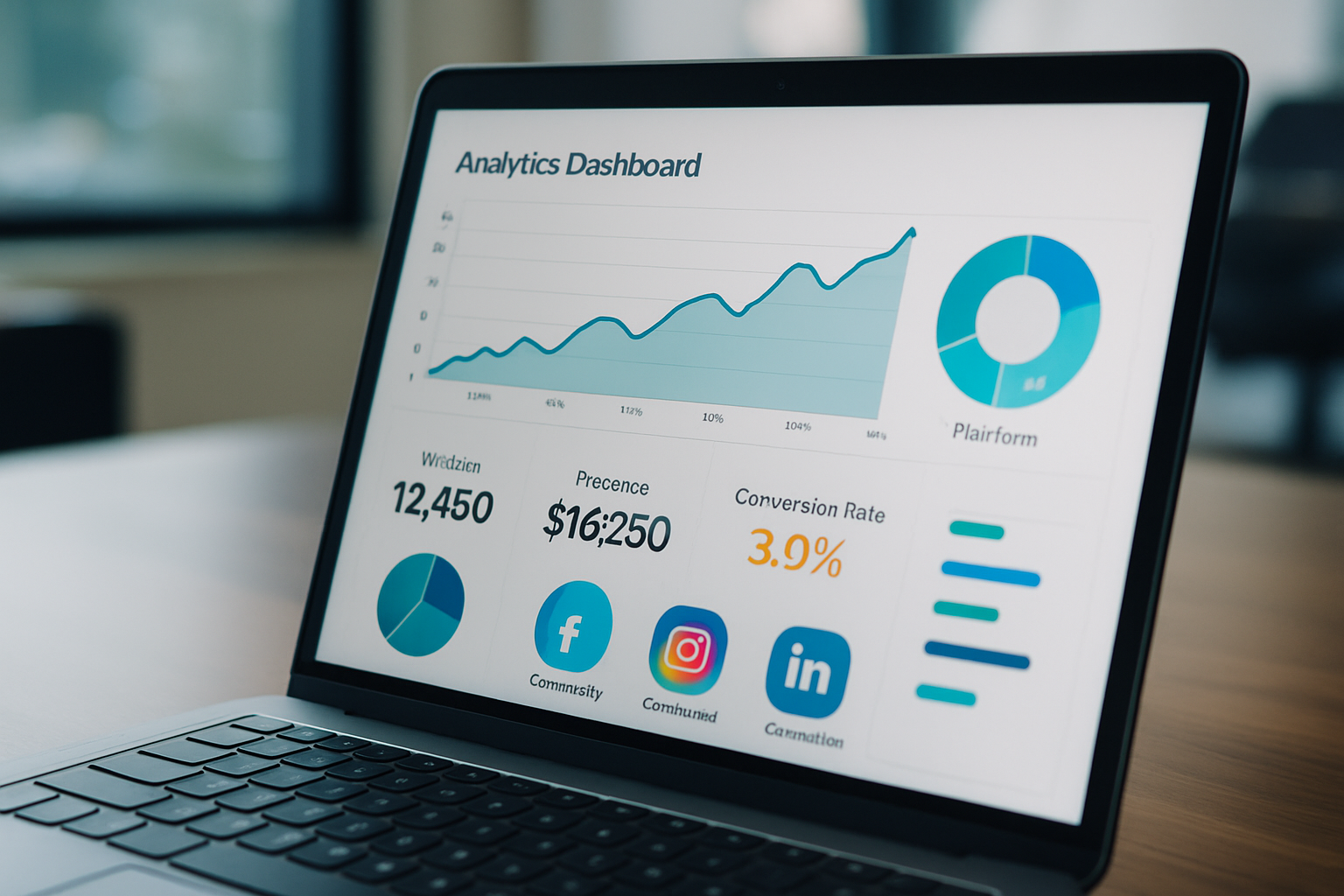
Build a simple monthly dashboard that shows:
- Total social media costs
- Total revenue attributed to social media
- ROI percentage
- Top-performing content types
- Best-performing platforms
Share this with your team. Use it to make decisions about where to spend time and money next month.
At Agency 220, we help Billings businesses build ROI tracking systems that actually make sense for their specific situation—without overwhelming them with data they'll never use.
Because at the end of the day, measuring ROI isn't about impressive analytics dashboards. It's about knowing whether your social media investment is worth it, and having the data to make it better every single month.