Website Redesign Timeline and Process: What to Expect in 2026
A strategic website redesign takes 8-16 weeks. Here's what happens during each phase and how to avoid delays that derail most projects.
You've decided it's time. Your website isn't converting like it should, your bounce rate is climbing, and you're starting to notice signs your business needs a website redesign. But now comes the hard part: figuring out how long this is actually going to take and what steps you'll need to follow.
Most small business owners underestimate the timeline. They think a redesign is a quick fix—maybe a few weeks of tweaking colors and updating copy. In reality, a strategic website redesign timeline and process typically spans 8 to 16 weeks from kickoff to launch, depending on your site's complexity and how prepared you are going in.
Let's break down exactly what happens during each phase so you know what to expect, what to prepare, and how to avoid the delays that derail most projects.
Phase 1: Discovery and Strategy (Weeks 1-2)
This is where most businesses want to rush, but it's also where the entire project gets built on solid ground—or shaky assumptions.
During discovery, you're answering fundamental questions: Who are you actually trying to reach? What actions do you want them to take? What's working on your current site, and what's bleeding traffic?
What Happens During Discovery
- Stakeholder interviews to align on goals and expectations
- Competitor analysis to identify opportunities
- Analytics review to understand current user behavior
- Content audit to catalog what you have and what needs updating
- Technical SEO assessment (critical if you want to redesign without losing SEO)
In Billings, we've worked with manufacturing companies and professional services firms who skipped this phase entirely. They jumped straight into design, only to realize halfway through that they were building the wrong site for the wrong audience. Discovery prevents that expensive mistake.
Your Role as a Business Owner
You'll need to carve out time for interviews and provide access to analytics, customer data, and any brand assets. The more prepared you are with this information, the faster this phase moves.
Phase 2: Information Architecture and Wireframing (Weeks 3-4)
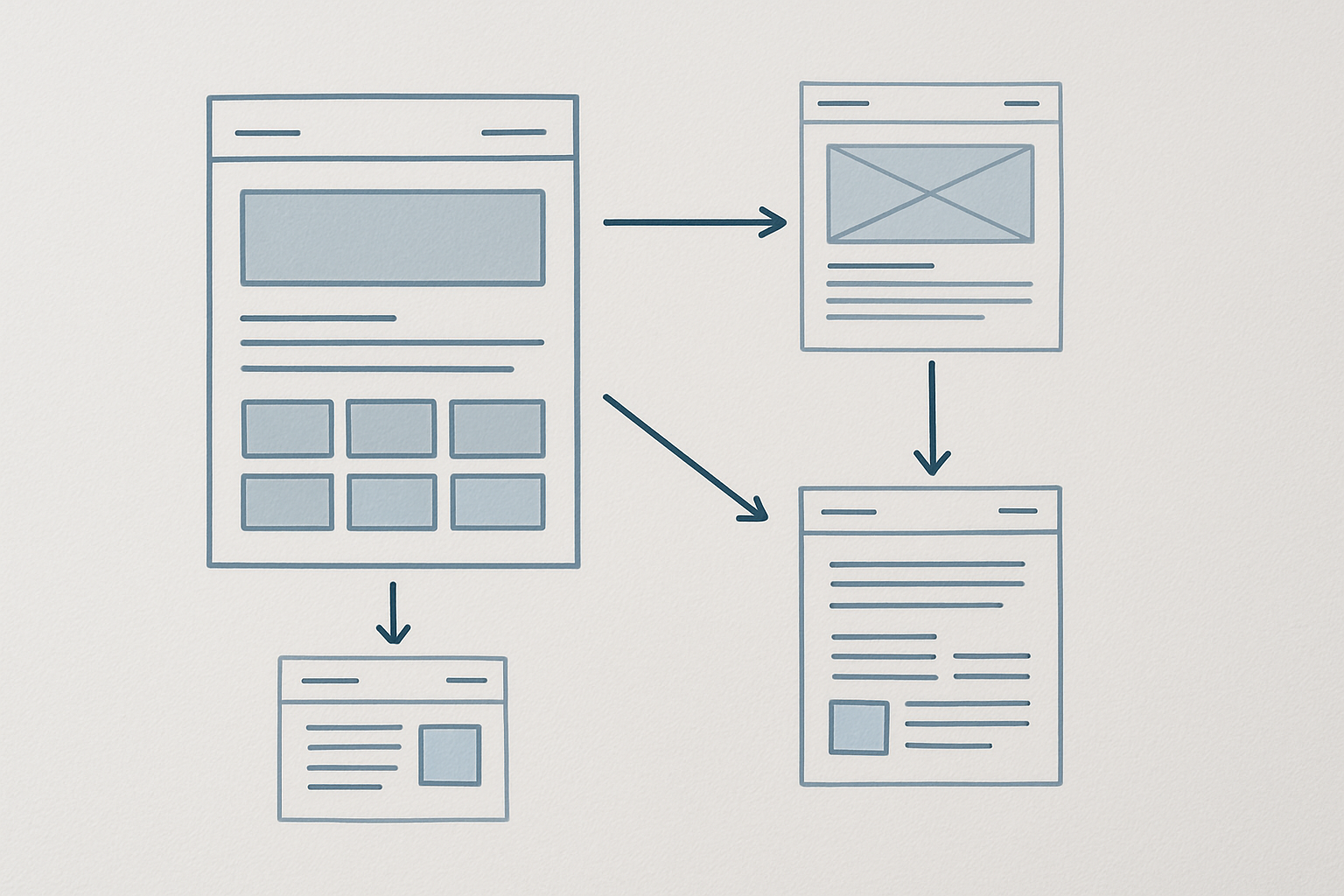
Before anyone touches a color palette or picks a font, you need to figure out how your site is organized. This is information architecture—the skeleton that determines whether visitors can actually find what they're looking for.
Wireframes are low-fidelity layouts that map out where content, CTAs, and navigation elements live on each page type. They look boring on purpose. You're solving for structure and user flow, not aesthetics.
Key Deliverables
- Sitemap showing your new site structure
- User flow diagrams for critical conversion paths
- Wireframes for homepage, service pages, and key landing pages
- Navigation architecture that makes sense for your audience
This phase typically takes 1-2 weeks, but it depends heavily on how decisive you are. If you're constantly second-guessing the layout or trying to squeeze in "just one more page," this phase drags on—and delays everything downstream.
Phase 3: Design and Content Creation (Weeks 5-9)
This is the phase most business owners get excited about—and where timelines often go sideways.
Your design team creates high-fidelity mockups based on the approved wireframes. At the same time, you're either writing new content or working with a copywriter to craft messaging that actually converts.
Design Timeline Breakdown
- Weeks 5-6: Initial design concepts for homepage and 2-3 key page templates
- Week 7: Revisions based on your feedback
- Weeks 8-9: Design remaining page templates and components
Here's where things get real: design revisions can either keep you on schedule or blow past your deadline. If you're giving feedback like "make it pop" or "I'll know it when I see it," expect delays. Specific, actionable feedback moves projects forward.
Content Creation Can't Be an Afterthought
We've seen Montana business owners treat content like it's something they'll "get to later." That's a mistake. Your design team needs actual content—not placeholder text—to build pages that work.
If you're creating your own content, start writing before design begins. If you're hiring it out, make sure that's scoped into your project timeline. A good website redesign checklist includes content deadlines that match your design milestones.
Phase 4: Development and Integration (Weeks 10-13)
Now your approved designs get turned into actual code. Developers build out page templates, integrate your CMS, set up forms, connect third-party tools, and make sure everything works across devices and browsers.
What's Happening Behind the Scenes
- Front-end development (what users see and interact with)
- Back-end development (CMS setup, database configuration)
- Third-party integrations (CRM, email marketing, analytics)
- Mobile responsiveness testing
- Cross-browser compatibility testing
This phase usually takes 3-4 weeks for a standard small business site. If you're building custom functionality—like a configurator, member portal, or advanced filtering—add another 2-4 weeks minimum.
You won't see much during the first week or two of development. That's normal. Developers are building the foundation. Visual progress picks up in weeks 2-3 once the framework is solid.
Phase 5: Quality Assurance and Testing (Weeks 14-15)
This is not optional. This is where you catch broken links, form errors, slow load times, and mobile display issues before your customers do.
QA Checklist Essentials
- Functionality testing on all forms and CTAs
- Cross-browser testing (Chrome, Safari, Firefox, Edge)
- Mobile responsiveness on multiple devices
- Page speed optimization and performance testing
- SEO element verification (meta tags, redirects, structured data)
- Accessibility compliance check
Budget at least 1-2 weeks for QA. Rushing this phase is how you launch a site with broken contact forms or pages that don't load on mobile—both of which will cost you leads immediately.
Phase 6: Launch and Post-Launch Support (Week 16+)
Launch day isn't the finish line. It's the starting line for measuring ROI of your website redesign and making data-driven improvements.
The Week of Launch
- Final content review and client approval
- DNS migration and site deployment
- 301 redirect implementation (critical for SEO preservation)
- Analytics and tracking verification
- Monitoring for any post-launch issues
Plan for some post-launch support—typically 1-2 weeks where your team monitors performance, fixes any edge-case bugs, and makes minor adjustments based on real user behavior.
What Slows Down Website Redesign Timelines
Knowing the process is one thing. Staying on schedule is another. Here are the most common delays we see with small business clients:
- Slow feedback cycles: Taking a week to review design mockups pushes everything back a week
- Content bottlenecks: Missing photos, outdated copy, or last-minute rewrites
- Scope creep: Adding "just one more feature" mid-project
- Decision-making paralysis: Endless revisions because stakeholders can't align
- Technical surprises: Your current hosting can't support the new site architecture
The best way to stay on track? Follow a comprehensive website redesign guide from the start, build in buffer time for revisions, and assign one point person who can make final decisions quickly.
Your Website Redesign Timeline Starts With Preparation
An 8-16 week website redesign timeline is realistic if you're prepared and decisive. It stretches to 20+ weeks if you're figuring things out as you go.
Before you kick off your project, gather your analytics, clarify your goals, and make sure you have the internal bandwidth to give timely feedback. The agencies and freelancers you work with can only move as fast as you can provide input and approval.
At Agency 220, we've guided dozens of Montana businesses through website redesigns that launch on time and start converting immediately. If you're ready to start your project with a clear timeline and process, let's talk about what it takes to get your new site live in 2026.