Rebranding Strategy for Growing Companies: The Complete Guide to Evolution Without Losing Your Soul
Learn how to execute a rebranding strategy for growing companies that aligns brand with business reality and drives measurable growth.
Your company has doubled revenue in two years. Your team has tripled. Your original logo—the one you sketched on a napkin—now looks embarrassingly amateur on investor pitch decks. Your brand story still references that basement office you moved out of 18 months ago.
You're not failing. You're outgrowing your brand. And if you don't address it strategically, you'll either confuse customers who loved the original you, or worse, become invisible to the market you're trying to capture.
A poorly executed rebrand can erase customer trust overnight. A well-planned one positions you for the next decade of growth.
Table of Contents
Why Rebranding Matters More Than You Think
Here's the uncomfortable truth: your brand is already being rebranded—by your customers, competitors, and the market—whether you're involved or not. Every inconsistent customer experience, every outdated marketing asset, every misaligned message is quietly rewriting your brand story in ways you can't control.
Strategic rebranding lets you take back that narrative.
For growing companies, a rebrand isn't about chasing trends or appeasing bored designers. It's about alignment. When your internal reality (team size, capabilities, market position) no longer matches your external perception (website, messaging, visual identity), that gap becomes expensive.
Prospects dismiss you as too small. Existing customers feel confused by mixed messages. Top talent scrolls past your job postings because your brand doesn't reflect the company you've become.
In markets like Billings, Montana, where word-of-mouth still drives significant business, brand inconsistency spreads fast. The construction company that still looks like a two-person operation when they're managing $10M projects loses bids to competitors with brands that match their capabilities.
The Real Cost of Waiting
Every month you delay a necessary rebrand costs you in:
- Lost deals: Prospects who judged your capabilities by your outdated brand presentation
- Recruitment challenges: Quality candidates who couldn't see themselves at a company with amateur branding
- Pricing pressure: Clients who negotiate harder because your brand doesn't command premium positioning
- Market confusion: Customers who aren't sure what you do anymore or who you serve
These aren't abstract concerns. They're measurable losses that compound quarterly. Just as measuring the ROI of a website redesign reveals hidden costs of outdated digital assets, tracking the opportunity cost of brand misalignment shows the real price of inaction.
When to Rebrand (and When to Absolutely Not)
Not every growth spurt demands a rebrand. Some companies waste six figures fixing what wasn't broken, while others limp along with brands that actively sabotage their growth.
Clear Signals It's Time to Rebrand
You've pivoted your business model: If you started as a web design shop and now you're a full-service marketing agency like Agency 220, your brand needs to reflect that expanded scope. Prospects looking for comprehensive marketing solutions will scroll past you if your brand still screams "WordPress freelancer."
You're entering new markets: Geographic expansion or vertical shifts often require brand adjustments. What worked for residential clients might not resonate with commercial buyers. What connected with Montana customers might fall flat in Denver or Seattle.
Your competitors have evolved around you: If everyone in your category has modernized and you're still rocking a 2012 aesthetic, you're signaling that you're behind in more than just design. Customers assume outdated brands mean outdated capabilities.
You can't explain what you do anymore: When your elevator pitch requires a flowchart and your team members describe the company differently to prospects, your brand messaging has fractured. This typically happens after acquisitions, major service additions, or leadership changes.
Your pricing and positioning don't match: You've raised prices to reflect your increased value, but your brand still looks like the budget option. This disconnect creates cognitive dissonance that kills conversions.
Warning Signs You're Not Ready
You're bored with your current brand: Internal fatigue is not a customer problem. If your metrics are strong and customers aren't confused, a rebrand is expensive vanity.
You're trying to fix a business problem with design: Poor sales don't get fixed with a new logo. Weak customer retention doesn't improve with different brand colors. Solve the operational issue first.
You're reacting to one piece of feedback: One prospect who didn't like your website doesn't represent your market. Collect actual data through customer interviews, surveys, and competitive analysis before making brand decisions.
Your company is unstable: If you're still figuring out product-market fit, pivoting monthly, or unsure about your core offering, a rebrand is premature. Nail your business model first, then brand it.
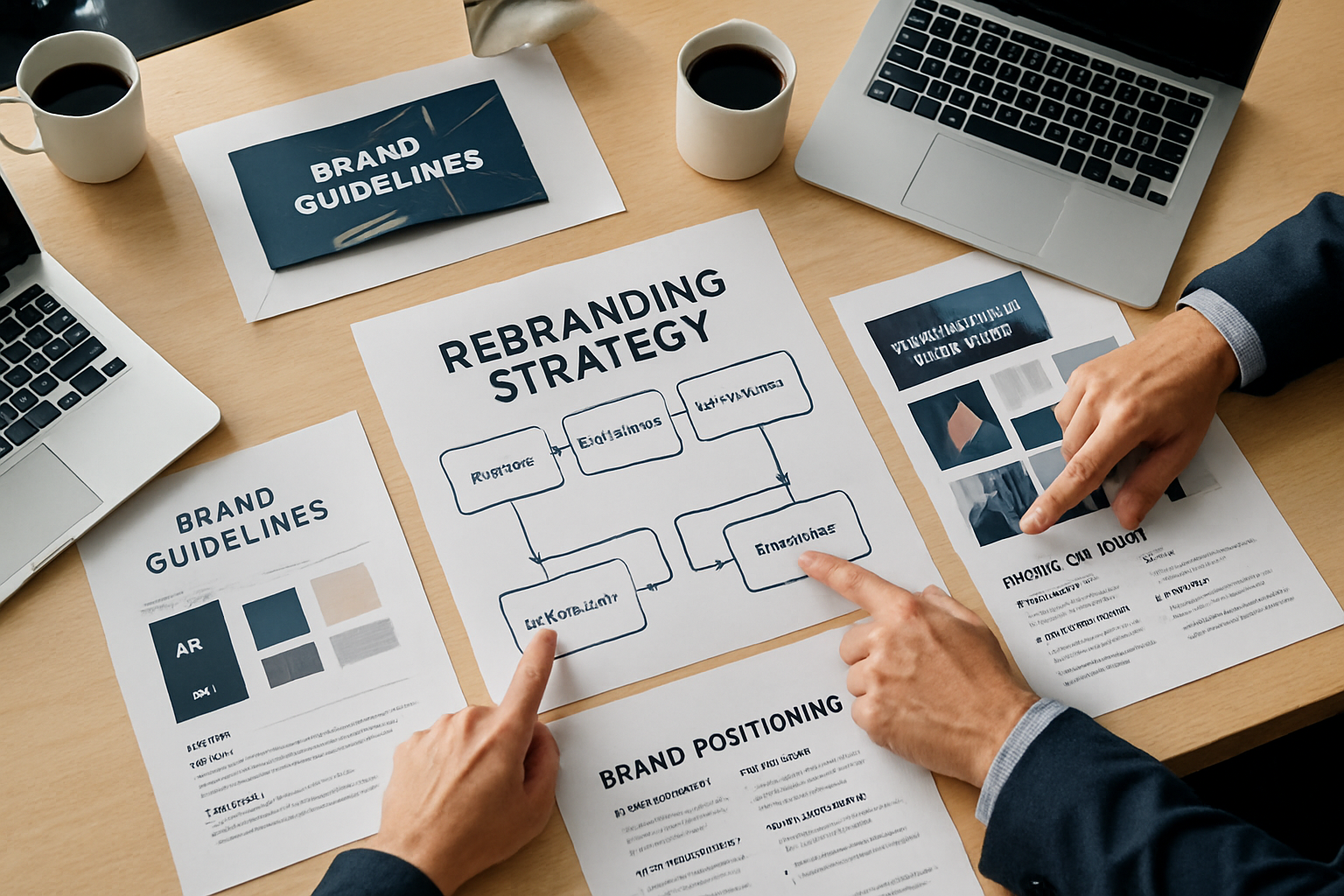
Building Your Rebranding Strategy: The Framework That Works
A rebranding strategy for growing companies requires the same rigor you'd apply to launching a new product line or entering a new market. This isn't a design project—it's a business initiative with measurable outcomes.
Step 1: Define Your Strategic Objectives
Start with the business reason for rebranding. Write it down. Be specific.
Bad objective: "Modernize our brand."
Good objective: "Reposition from small regional contractor to regional commercial builder capable of $5M+ projects, with brand assets that support expansion into healthcare and education verticals."
Your objectives should connect directly to revenue goals, market position, or operational capabilities. If you can't draw a line from the rebrand to business outcomes, you're not ready.
Step 2: Audit Your Current Brand Reality
Before you can strategically evolve, you need to know where you actually stand—not where you think you stand.
Conduct customer interviews asking specifically:
- How would you describe our company to a colleague?
- What words come to mind when you see our logo or website?
- What do you think we're best at?
- What surprised you about working with us versus what you expected?
Run a competitive analysis examining how direct competitors position themselves. Don't just look at design—analyze messaging, service descriptions, case study presentation, and pricing transparency. Similar to keyword research for content marketing, understanding the competitive landscape reveals positioning opportunities.
Internally, inventory every brand touchpoint: website, social profiles, email signatures, proposals, presentations, vehicle wraps, business cards, trade show booths. Document the inconsistencies. You'll find them.
Step 3: Define Your Target Audience With Painful Specificity
Growing companies often make the fatal mistake of broadening their audience during a rebrand. "We can serve everyone now!" No. That's how you dilute everything that made you successful.
Instead, get more specific about your ideal customer. Not demographics—psychographics and behaviors.
Who are you built to serve better than anyone else? What problems do you solve that competitors can't? What type of customer gets the most value from working with you?
Your rebrand should make those people feel seen while making wrong-fit prospects self-select out. That's not limiting your market—that's clarifying it. Much like how AI customer segmentation helps identify your most valuable audience segments, your rebrand should sharpen focus rather than diffuse it.
Step 4: Craft Your Brand Platform
This is the strategic foundation everything else builds on:
Brand positioning statement: One sentence that captures who you serve, what you do differently, and why it matters. This isn't customer-facing copy—it's your internal North Star.
Brand promise: The consistent experience customers can expect every time they interact with your company. Make it specific and deliverable.
Brand personality: If your brand were a person, how would they speak? What would they value? What would they never say or do? This guides voice, tone, and visual decisions.
Key messages: The three to five most important things you need prospects to understand about your company. Every piece of content should reinforce at least one of these.
This platform becomes the decision-making framework for everything from website redesign choices to social media content calendar planning.
Step 5: Develop Visual and Verbal Identity Systems
Only after you've locked in strategy do you touch design.
Visual identity includes logo system, color palette, typography, iconography, photography style, and graphic elements. These should feel cohesive while remaining flexible enough to work across every touchpoint you identified in your audit.
Verbal identity covers voice, tone, messaging frameworks, and actual copy for core assets. This is where many rebrands fall short—they invest in gorgeous design but recycle old messaging that undermines the new positioning.
Both systems need detailed brand guidelines that your team (and any external partners like marketing agencies) can reference to maintain consistency.
The Execution Phase: Where Most Rebrands Fail
Strategy is necessary but insufficient. Execution is where theoretical brand work either comes alive or dies quietly.
Sequencing Your Rollout
Trying to update everything simultaneously is how rebrands spiral over budget and miss deadlines. Prioritize based on customer visibility and strategic importance.
Typical sequence for growing companies:
- Core digital assets: Website, email signatures, social profiles—the daily touchpoints
- Sales materials: Proposals, presentations, case studies, one-sheets
- Marketing collateral: Trade show materials, print ads, vehicle graphics
- Internal items: Office signage, swag, templates
Your website typically launches first because it's the center of your digital ecosystem. Everything else links there. But don't launch it half-baked—follow proven website design best practices and ensure it's optimized for mobile responsive design.
Managing Internal Adoption
Your team makes or breaks your rebrand. If they don't understand the strategy behind the new brand, they'll undermine it in every customer interaction.
Before public launch, conduct internal workshops covering:
- The business case for rebranding
- What's changing and why
- How to talk about the rebrand with customers
- How to use the new brand assets correctly
Create simple reference tools: one-page brand summaries, message templates, quick-start guides. Make it easier to use the new brand correctly than to default to old habits.
Customer Communication Strategy
Existing customers need context, not surprise. They formed a relationship with your old brand. Respect that.
Announce the rebrand through multiple channels with clear messaging about what's changing (visuals, maybe name) and what's not (your commitment to them, your capabilities, your team).
For B2B companies, personal outreach to key accounts makes sense. For broader customer bases, coordinated email, social, and website announcements work well.
The message should emphasize evolution, not revolution. You're growing to serve them better, not abandoning who you were.
SEO Considerations You Cannot Ignore
If your rebrand includes a website redesign or URL structure changes, improper handling can obliterate years of SEO work overnight.
Essential SEO safeguards:
- Maintain existing URL structure when possible
- Implement proper 301 redirects for every changed URL
- Update all internal links site-wide
- Revise page titles and meta descriptions to reflect new messaging while preserving ranking keywords
- Notify Google of significant changes through Search Console
Our detailed guide on how to redesign a website without losing SEO covers the technical specifics, but the principle is simple: preserve the equity you've built while implementing your new brand.
Measuring Rebrand Success: Beyond the Logo Reveal
The rebrand launch party is not the finish line. Real success shows up in metrics over months.
Leading Indicators (First 90 Days)
These signal whether your rebrand is resonating:
- Website engagement: Time on site, pages per session, bounce rate compared to pre-rebrand baselines
- Social media response: Engagement rates, follower growth, sentiment in comments
- Sales team feedback: Are conversations easier? Are prospects responding differently?
- Employee advocacy: Are team members proudly sharing the new brand, or quietly avoiding it?
Track these weekly. They'll tell you if course corrections are needed before you've invested fully in every touchpoint.
Lagging Indicators (6-12 Months)
These show the business impact:
- Lead quality and volume: Are you attracting better-fit prospects? Just as you would with lead generation strategies, measure both quantity and quality
- Conversion rates: From initial contact through closed deals
- Average deal size: Does your new positioning support higher pricing?
- Customer retention: Did existing clients stay through the transition?
- Talent acquisition: Are you attracting stronger candidates?
Similar to measuring content ROI, rebrand ROI requires patience and proper attribution. Set realistic timelines for seeing results.
Qualitative Feedback Loops
Numbers don't tell the whole story. Schedule customer check-ins specifically about brand perception:
- "What's your impression of our new brand?"
- "Does it change how you think about our capabilities?"
- "Is anything confusing or unclear?"
This feedback often reveals perception gaps that metrics miss.
Common Rebranding Mistakes Growing Companies Make
Mistake #1: Design Before Strategy
Jumping straight to logo options before defining positioning is like picking paint colors before you've drawn blueprints. You might get lucky, but probably not.
Strategy dictates design decisions. Without it, you're making aesthetic choices disconnected from business objectives.
Mistake #2: Rebranding by Committee
Trying to incorporate everyone's opinion produces bland, forgettable brands designed to offend no one and inspire no one.
Assign clear decision-making authority. Gather input broadly, but let a small group (ideally CEO plus marketing lead plus one outside perspective) make final calls.
Mistake #3: Ignoring Brand Architecture
As companies grow, they often add services, products, or divisions without thinking about how they relate to the master brand.
Before rebranding, map your brand architecture. Is this a house of brands, branded house, or hybrid? How do sub-brands relate to the parent? Clarity here prevents expensive confusion later.
Mistake #4: Underestimating Timeline and Budget
Most rebrands take 2-3x longer and cost 1.5-2x more than initial estimates. Plan accordingly.
For a comprehensive rebrand including strategy, identity development, website, and core materials, expect 4-6 months minimum for a growing company. Rushing creates quality problems that cost more to fix.
Mistake #5: Treating It as a One-Time Project
Your rebrand isn't finished when assets are delivered. It's finished when it's fully integrated into operations and every team member confidently represents it.
Budget for ongoing brand management: asset creation, guideline updates, training new hires, monitoring consistency. Brands drift without active stewardship.
Mistake #6: Forgetting Existing Customers
In the excitement of attracting new audiences, some companies alienate the customers who got them here.
If your rebrand makes long-time customers feel abandoned or confused about whether you still serve them, you've created an expensive problem. Evolution, not abandonment.
Moving Forward: Your Next Steps
If you've recognized your company in this guide—outgrowing your brand, confusing your market, or leaving money on the table because your brand doesn't match your capabilities—you have three options.
Option one: ignore it and hope the problem resolves itself. It won't.
Option two: DIY your rebrand, risking expensive mistakes and brand inconsistency that undermines your growth.
Option three: partner with professionals who've guided growing companies through successful rebrands that actually move business metrics.
At Agency 220, we've worked with businesses throughout Montana and beyond to develop rebranding strategies that align brand with business reality. We don't do vanity rebrands—we do strategic repositioning that opens doors, attracts better customers, and supports the next phase of growth.
Our approach starts with understanding your business objectives, not design trends. We measure success by whether your rebrand helps you close bigger deals, attract better talent, and command the market position you've earned.
Ready to explore whether a rebrand makes strategic sense for your company? Check out our portfolio to see recent rebrand work, review our full service offerings, or reach out directly to start a conversation about your specific situation.
Your company has evolved. Make sure your brand reflects the business you've become, not the one you started.