LinkedIn Advertising for B2B Companies: How to Turn Professional Connections Into Real Customers
Learn how to use LinkedIn advertising to reach decision-makers, generate qualified B2B leads, and turn professional connections into real customers.
If you're running a B2B company and ignoring LinkedIn ads, you're leaving qualified leads on the table. While competitors chase likes on Instagram, the decision-makers you actually need to reach are scrolling LinkedIn during their lunch breaks—looking for solutions to the exact problems you solve.
LinkedIn isn't just another social platform. It's where professionals go to think about work, research vendors, and make buying decisions. The platform gives you targeting capabilities you won't find anywhere else: job titles, company size, industry, seniority level, even specific companies. You can literally serve ads to CFOs at manufacturing companies with 50-200 employees in the Pacific Northwest.
Let's break down exactly how to make LinkedIn advertising work for your B2B company without wasting budget on clicks that go nowhere.
Why LinkedIn Beats Other Platforms for B2B Lead Generation
The math is simple: LinkedIn users are in work mode. When someone opens Facebook, they're looking at vacation photos and cat videos. When they open LinkedIn, they're thinking about their job, their industry, their next vendor.
This mindset shift changes everything. Your ad for accounting software or industrial equipment isn't interrupting their day—it's potentially solving a problem they're already thinking about.
The targeting precision matters more than you think. If you sell HR software to mid-sized tech companies, you can target HR Directors at companies with 100-500 employees in the software industry. No other platform lets you get that specific. This precision means your social media advertising budget goes further because you're not paying for impressions from people who'll never buy.
Here's what makes LinkedIn different:
- Intent-driven environment where users expect professional content
- Self-reported professional data (people keep their profiles current)
- Decision-makers who actually have buying authority
- Longer consideration cycles that match B2B sales
- Built-in credibility through company pages and employee advocacy
Setting Up Your First LinkedIn Ad Campaign (The Right Way)
Most businesses overthink their first campaign. Start simple with a clear objective: do you want leads, website traffic, or brand awareness?
For most B2B companies, lead generation campaigns work best. LinkedIn's lead gen forms pre-fill with user data, removing friction from the conversion process. Someone clicks your ad, sees their info already filled in, and submits in about three seconds.
Your campaign structure should look like this:
Choose Your Campaign Objective
LinkedIn offers several objectives, but for B2B lead generation, focus on "Lead Generation" or "Website Conversions." Lead gen forms keep people on LinkedIn. Website conversions send them to your landing page. Test both to see which converts better for your offer.
Define Your Audience Precisely
This is where LinkedIn shines. Start with these targeting layers:
- Job titles: Target decision-makers, not just anyone in the department
- Company size: Match your ideal customer profile
- Industry: Get specific—"Construction" is too broad, try "Commercial Construction"
- Seniority: Director-level and above if you're selling enterprise solutions
- Skills: Add relevant skills to narrow your audience further
A Montana-based B2B company targeting regional clients might add location targeting for the Mountain West states, keeping budget focused on prospects they can actually serve.
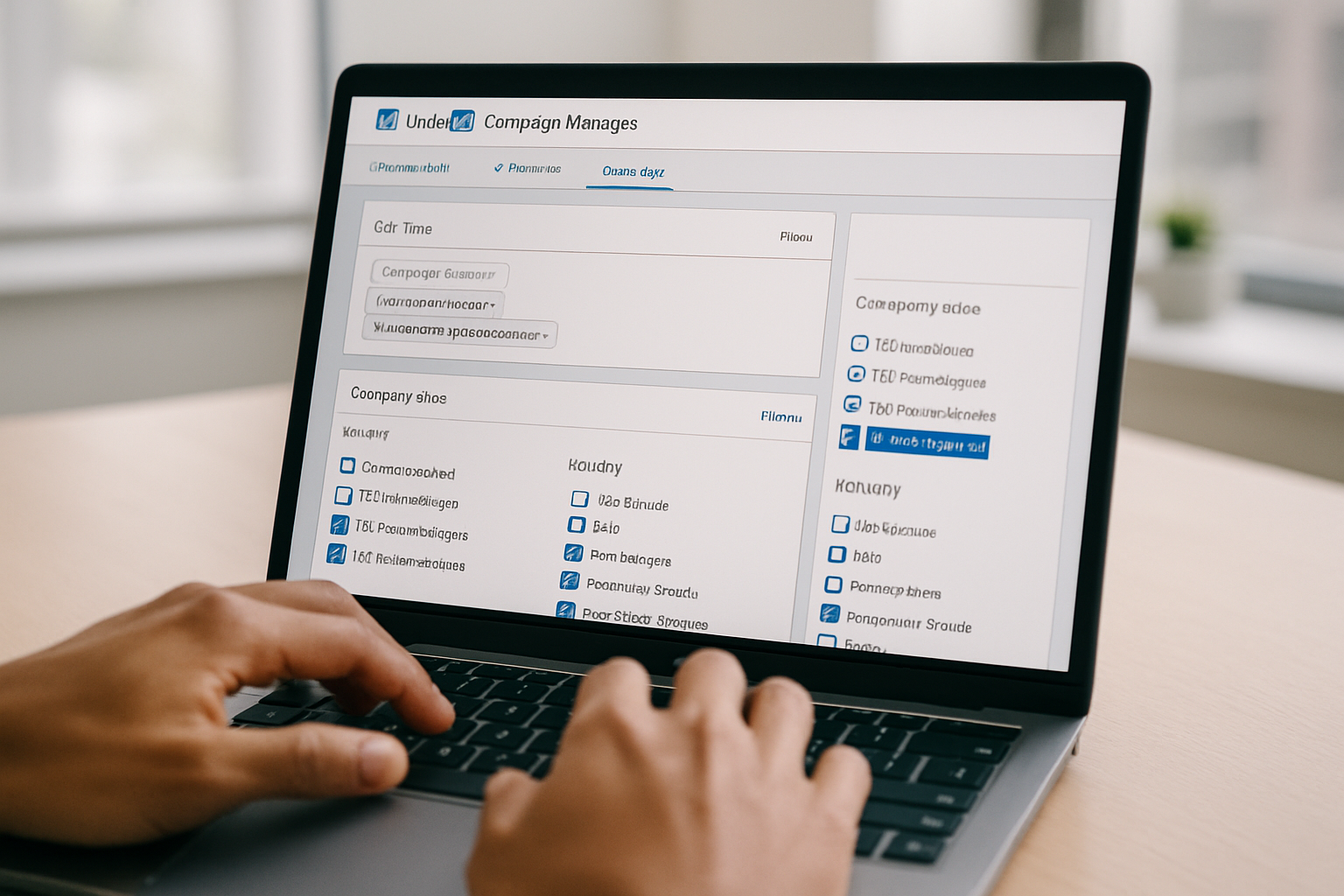
Set Your Budget and Bidding Strategy
LinkedIn ads cost more than Facebook or Google, but you're paying for quality, not quantity. Expect $5-15 per click depending on your industry and targeting.
Start with a daily budget of $50-100 to gather data. Use automated bidding initially—LinkedIn's algorithm is pretty good at optimizing for conversions once it has enough data.
Many small businesses worry about measuring social media ROI with higher CPCs, but remember: one qualified B2B lead is worth far more than 50 unqualified ones from cheaper platforms.
Creating Ads That Actually Convert B2B Buyers
LinkedIn users scroll fast. Your ad has about two seconds to stop them. Here's what works:
Write Copy That Speaks to Real Problems
Skip the corporate jargon. "Streamline your workflow" doesn't hit as hard as "Stop wasting 10 hours a week on manual data entry."
Lead with the pain point, follow with your solution, end with a clear call-to-action. Keep it under 150 characters if possible—LinkedIn truncates longer copy on mobile.
Use Visuals That Stand Out
Static images still outperform video on LinkedIn for most B2B campaigns. Use clean, professional visuals that relate to your offer. Charts, product screenshots, or simple text overlays on branded backgrounds work well.
Avoid stock photos that scream "stock photo." Real customer photos, actual product interfaces, or simple graphic designs feel more authentic.
Offer Something Worth Clicking
Nobody wants your generic company brochure. Offer something specific and valuable:
- Industry-specific research reports
- ROI calculators or assessment tools
- Case studies with real numbers
- Demo videos showing actual product features
- Webinar access with industry experts
Your offer should match where prospects are in the buying journey. Top-of-funnel prospects want educational content. Bottom-of-funnel prospects want demos and pricing.
Targeting Strategies That Actually Work
The businesses that win on LinkedIn layer their targeting strategically. Here are proven approaches:
Account-Based Marketing (ABM) Targeting
If you have a list of specific companies you want to land, upload it directly to LinkedIn. You can target employees at those exact companies, making your ad spend incredibly efficient.
Combine company targeting with job title targeting to reach decision-makers at your dream accounts. This works especially well for B2B companies with defined target account lists.
Lookalike Audiences from Your Best Customers
LinkedIn can analyze your current customers and find similar professionals. Upload your customer list (or website visitors), and LinkedIn will build a matched audience of similar users.
This approach works great when combined with AI customer segmentation to identify which customer segments perform best, then create lookalikes from those high-value segments.
Retargeting Site Visitors and Engaged Users
Install LinkedIn's Insight Tag on your website to build retargeting audiences. Someone who visited your pricing page is way more valuable than a cold prospect.
You can also retarget people who engaged with your LinkedIn content—video views, form fills, ad clicks. These warm audiences convert at 2-3x the rate of cold targeting.
Measuring What Actually Matters
LinkedIn's Campaign Manager shows you dozens of metrics. Most of them don't matter. Focus on these:
Cost per lead: What are you paying for each form submission or click? Compare this to your customer lifetime value to determine if the math works.
Conversion rate: What percentage of people who click actually convert? If this is below 5%, your offer or landing page needs work.
Lead quality: Are these leads turning into sales opportunities? Track leads through your CRM to see which campaigns generate actual revenue. Good CRM software makes this tracking automatic.
Cost per opportunity: Once you know which leads become real opportunities, calculate what you're paying per sales-qualified lead. This is your real benchmark.
Set up conversion tracking properly from day one. Use LinkedIn's conversion tracking pixel or integrate with your CRM to see the full funnel. Many B2B companies also use automated lead scoring to identify which LinkedIn leads are most likely to close.
Common Mistakes That Kill LinkedIn Ad Performance
After managing dozens of LinkedIn campaigns, we see the same mistakes repeatedly:
Targeting too broad: A 500,000-person audience might feel safe, but you'll burn budget fast. Narrow to 50,000-150,000 for most B2B campaigns.
Sending clicks to your homepage: Your homepage serves too many purposes. Send ad traffic to dedicated landing pages built for conversion.
Ignoring mobile: Over 60% of LinkedIn users access on mobile. If your landing page isn't mobile-optimized, you're losing half your leads. This ties into broader mobile responsive design principles that matter across your entire web presence.
Giving up too soon: LinkedIn campaigns need time to optimize. Give each campaign at least $1,000 in spend before making major changes.
Using the same creative forever: Even winning ads suffer from fatigue. Refresh your creative every 4-6 weeks to maintain performance.
Making LinkedIn Advertising Work for Your B2B Company
LinkedIn advertising isn't cheap, but for B2B companies selling to other businesses, it's often the most efficient channel. The targeting precision, professional context, and decision-maker access justify the higher CPCs.
Start with a clear objective, target precisely, offer genuine value, and measure what matters. Your first campaign won't be perfect—none are. But with systematic testing and optimization, LinkedIn can become your most reliable source of qualified B2B leads.
The businesses that win on LinkedIn treat it like a long-term channel, not a quick experiment. They build audiences, test messaging, optimize conversion paths, and integrate LinkedIn data with their broader lead generation strategy.
If you're ready to build a LinkedIn advertising strategy that actually generates revenue, let's talk. Agency 220 helps B2B companies in Billings and beyond turn LinkedIn ads into predictable lead generation systems. We handle the targeting, creative, optimization, and reporting—you handle the sales conversations.